REVIEWING FEEDBACK
And we are back to school again. I still can’t believe it is our final semester of school. Time really has flown by. If you are wondering whether I did anything productive during the school break, I did not. And honestly, that was intentional. I needed a proper break from academic work. But that rest has helped me return feeling more refreshed and ready to face semester two!
Before my first consultation with Andreas, I took some time to revisit and break down the feedback he had given me previously over the break. This helped me understand the concerns he raised and how they might shape the direction of my dissertation and project.
① Extent of Engagement — Andreas raised concerns about my implementation of mental health statistics and whether my project intended to engage directly with individuals experiencing mental health issues. My original intention was to use these statistics as contextual framing. I wanted to suggest that prolonged emotional suppression can contribute to mental health challenges and that developing emotional awareness may support healthier emotional regulation. However, I realised that this framing could be misleading, especially I do not plan to work directly with mental health practitioners or patients.
② Areas of Focus — Andreas suggested that I narrow my focus to three key aspects, which are interaction, visual design and experience. This aligns with his earlier point that my dissertation should lean more towards design inquiry rather than psychological or clinical discussions. This feedback helped me recognise that the value of this research lie in exploring how design mediates emotional awareness rather than explaining mental health conditions.
③ Speculative / Design Fiction — Andreas also questioned my use of design fiction, specifically whether it was meant to explore ‘what-if’ scenarios rather than propose a fully realised, product-ready solution.
THE NEW DIRECTION
During the consultation, I raised my concerns openly with Andreas and we discussed both the dissertation and the project direction. Through this conversation, we agreed on several key adjustments moving forward.
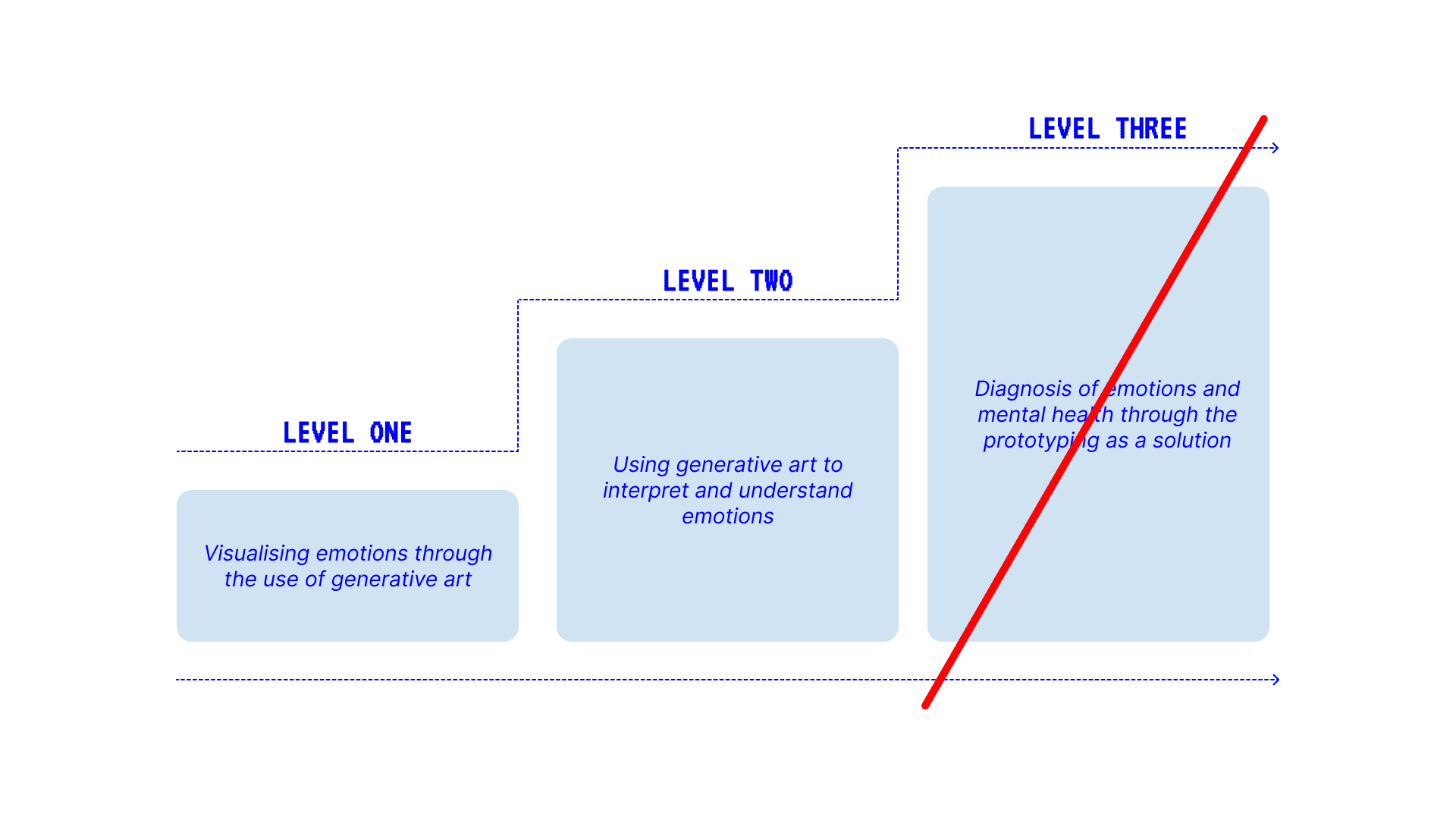
① Pivoting away from ‘Mental Health’ — Toward the end of semester 1, I was still framing the project within the context of mental health. However, I now recognise that this is a heavy and sensitive topic and I am not equipped nor intending to engage with it at a clinical level. Therefore, why should I even include it in my dissertation? Andreas advised that I should focus on Levels 1 and 2 for my research and that if mental health still remains relevant in my dissertation, it could fall into the 4.0 Notes for Further Research section rather than forming the foundation of the dissertation.
② Use of ‘What-if’ Scenarios — I clarified that the use of design fiction is meant to create provocations rather than solutions. The prototype that I am developing is not intended to “fix” emotional awareness, but to prompt individuals to reflect on how they currently process and acknowledge their emotions. Its value lies in sparking dialogue and self-awareness rather than providing a measurable outcome. Building on this, Andreas suggested that the prototype could function as an ‘asset’ within a narrative medium such as a film, which opened up the possibility of developing a series of short-films as part of my final outcome.
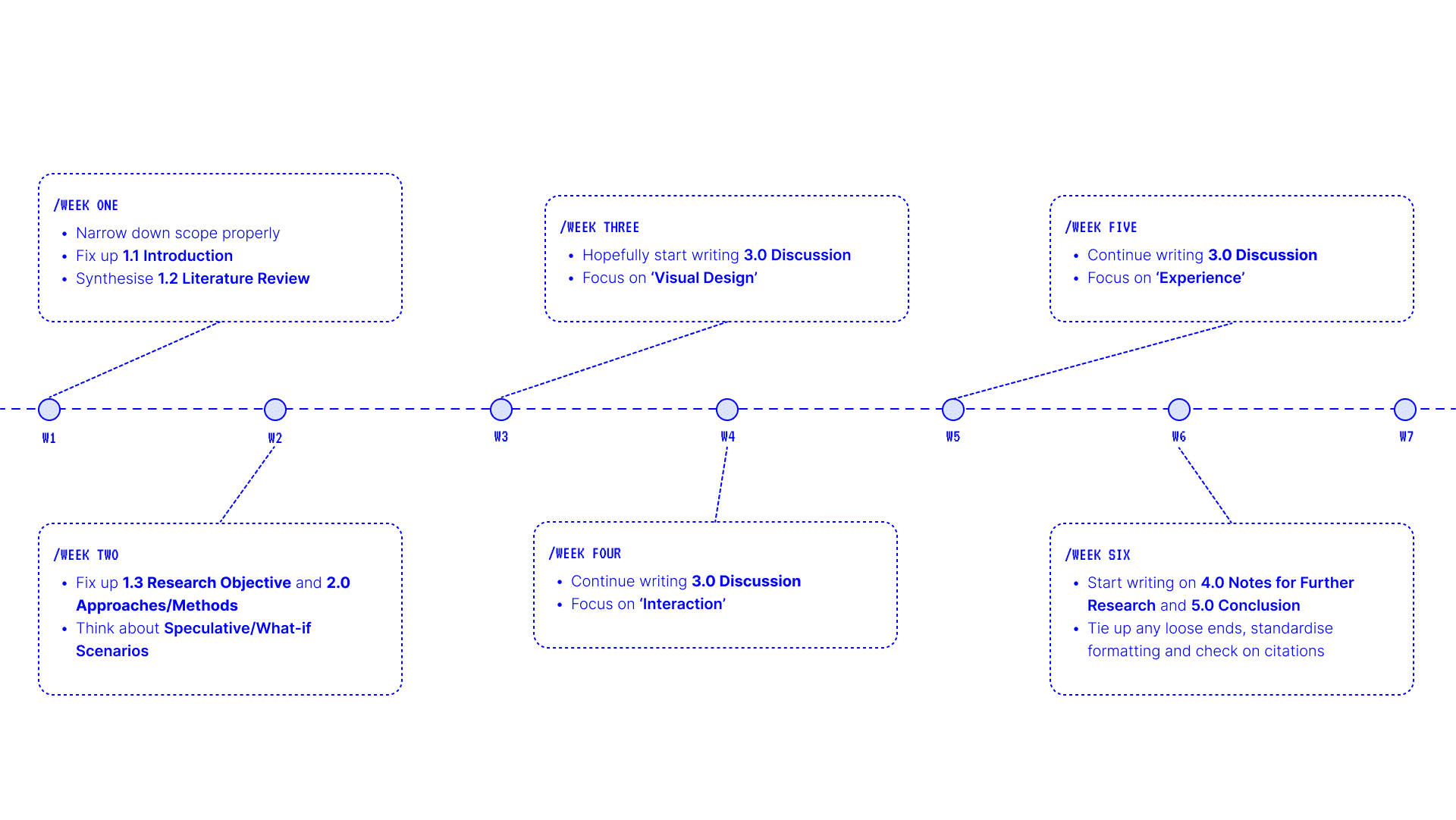
This discussion led me to create a dissertation timeline as a practical reminder of the limited time I have left before submission. I hope that with this dissertation timeline in mind, I will follow it closely while I continue making new prototypes.