SPLITTING IT INTO TWO
After last week’s crashout, I kept asking myself why was I forcing the visual interface and the controller to function as a single system when they don’t coexist in the fictional world. The more I thought about it, the more I realised it was a conceptual issue rather than a technical one. Instead of continuing to push them together, I decided to separate these two components into two distinct artefacts, each with its own logic and narrative role.
AURACLE
Since the visual system is meant to function automatically within the emotion-sensing eyewear, I shifted the interaction away from manual control. I reintroduced facial tracking so that the interface could detect and respond to micro-expression autonomously. I also experimented with object detection to recognise the presence of my glasses. This helps to simulate the fictional idea when the eyewear is worn, the system is activated and appears through the lens.
This shift immediately felt more coherent. The system now behaves in alignment with its speculative premise: it reads, processes and displays emotional data without user manipulation.
Reflecting on it, AURACLE feels like a convergence of earlier explorations; a mixture of Experiment 003 Hidden States, Experiment 004 Emotive Sphere and Prototype 001 Mood Mirror. It carries forward the idea of hidden emotions being revealed, but situates it within a wearable, observational product.
AURAGRAPH
I also did not want to abandon the controller, especially after investing so much effort into designing and laser cutting it. Instead, I reframed it as a separate artefact.
AURAGRAPH becomes a manual emotional mapping tool. Unlike AURACLE, which reads emotions automatically, AURAGRAPH allows users to consciously shape and externalise their feelings through a physical input. In this iteration, the visual begin from a neutral base form and the controller manipulates its structure, density and colour
For the sake of the presentation, this version is enough to communicate the idea. However, I will be planning to improve on this prototype. My next step is that AURAGRAPH is able to reveal the “aura” of the user; since its name is to “draw” aura. Therefore, I will need to introduce the camera input and design another layer of visuals that emerge around the body. At the moment, it is operating more as an abstract visualiser rather than a true-revealing system.
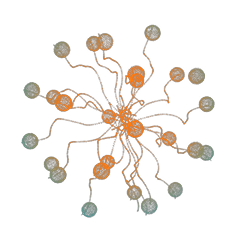
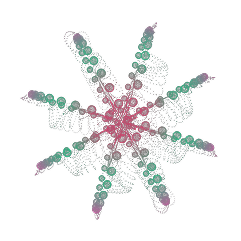
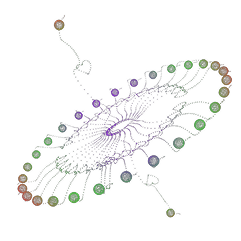
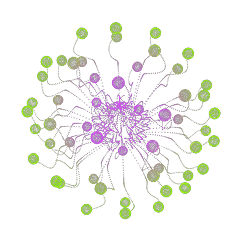
Conceptually, AURAGRAPH feels like a continuation of Experiment 001 Six Basic Emotions combined with Experiment 002 Aura Scanner. It retains the idea of mapping feeling to form, but now through tangible, physical interaction.
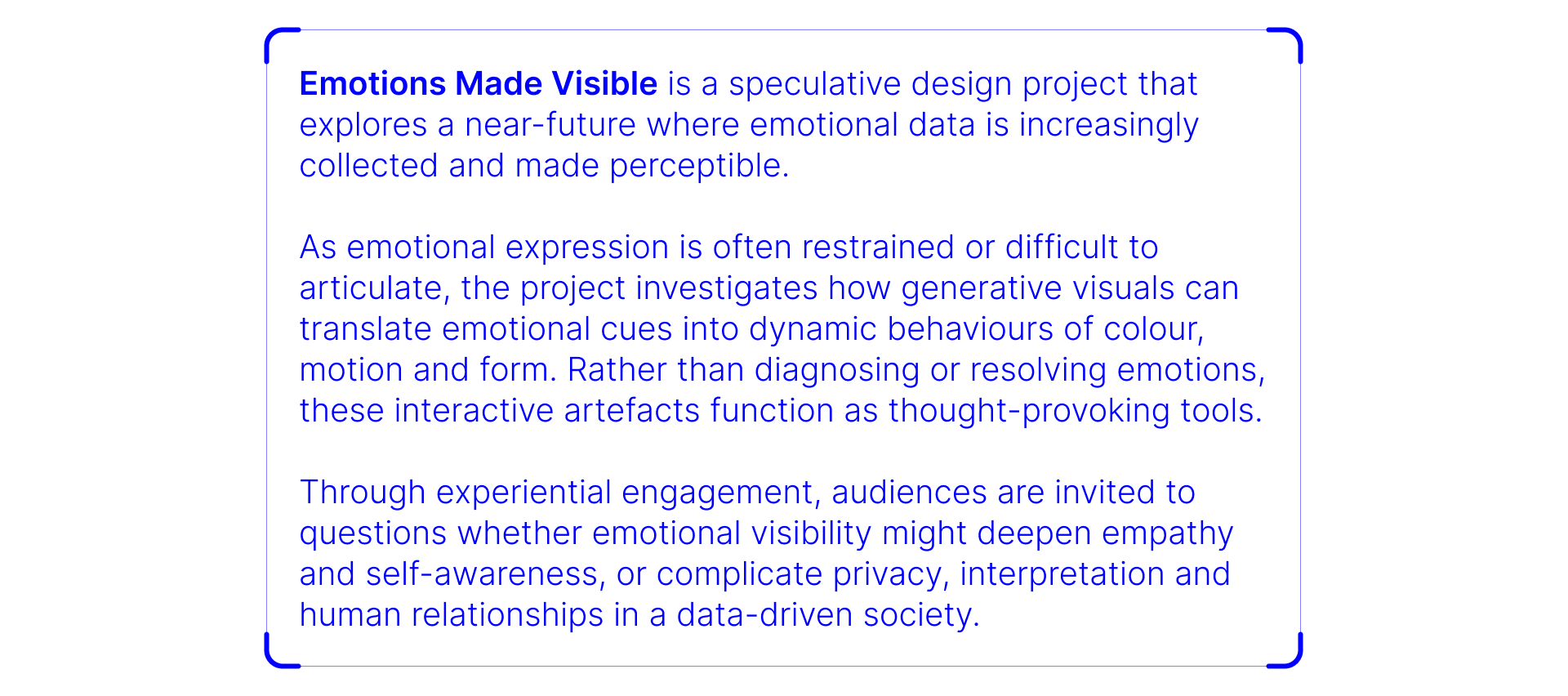
DESIGN STATEMENT
Currently, my design statement is still in the works but this is what I have written so far;
FEEDBACK
A key concern Andreas raised was clarity of communication. While the project feels coherent to those already familiar with my work, it is not immediately understandable to an outsider. The ideas behind AURACLE and AURAGRAPH are conceptually rich, but they currently require verbal explanation to make sense. The challenge moving forward is to develop a stronger narrative that communicates the meaning of these artefacts without relying on additional clarification.
He also pointed out the purpose of AURACLE, which is “to understand others better”, feels vague. From a non-design perspective, this could be interpreted as overly idealistic or abstract. Andreas suggested pushing the speculative concept further into a more critical direction. For example, I could explore the fear of increasing technological transparency, a future where emotional data makes us vulnerable, exposed and stripped of privacy. This tension could form the backbone of a more compelling narrative.
Andreas also emphasised that the design work must come first. The goggles and auragraph should be treated as strong, resolved design artefacts before being framed within a speculative storyline. The narrative should support and carry the design, not the other way round. He mentioned that to be a strong futurist requires deep theoretical grounding and extensive engagement with future studies. In my case, the speculative layer should function as a support system for the design work and I should position myself as a designer more than a futurist.
Because of this, he highlighted the importance of storytelling formats such as video, photo-series or even a comic-like sequence. These mediums could situate the eyewear and auragraph within a fiction world, making their purpose and implications more immediately accessible.
In summary, Andreas’ feedback centres on three things;
① Clarify and strengthen the narrative frame, especially for an unfamiliar audience
② Push the speculative angle deeper and more critically, particularly around vulnerability and transparency
③ Prioritise high–quality design execution first. Let the narrative serve the design, not dominate it.
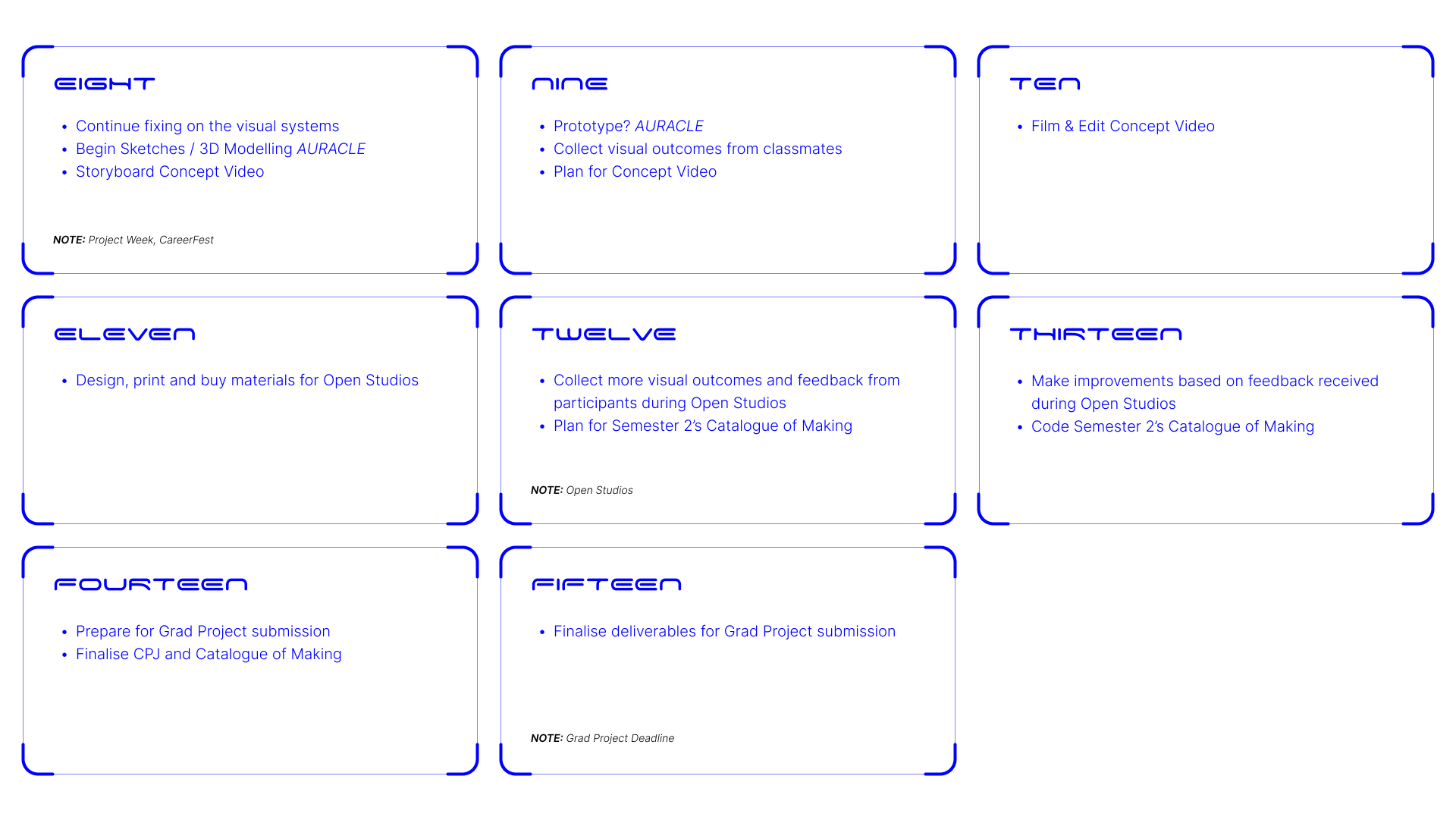
After the feedback, I made a timeline to visualise what I need to do on a weekly-basis till the end of the semester.