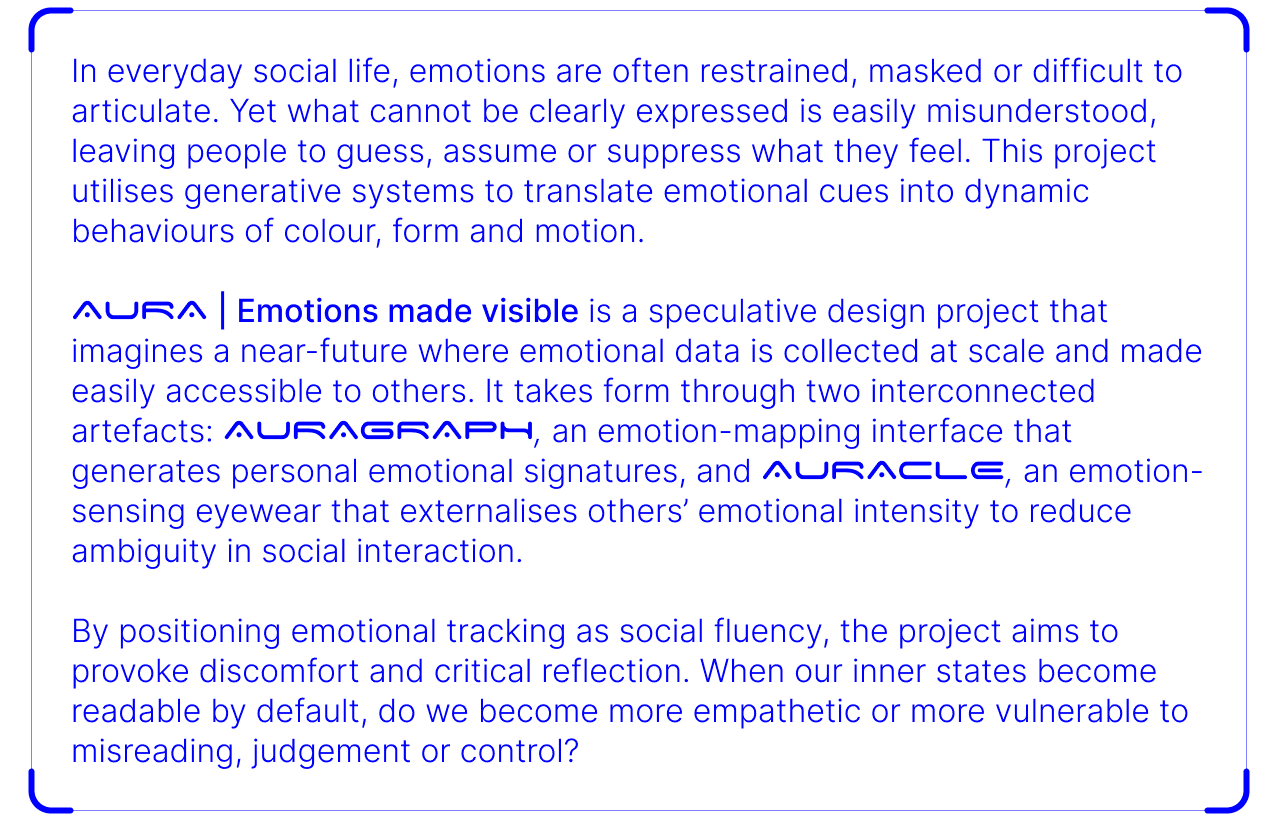
INTRODUCING 'AURA'
Based on last week’s feedback, Andreas encouraged me to push the speculative narrative further, exploring themes of discomfort and vulnerability. At that point, the two prototypes AURACLE and AURAGRAPH were existing as separate tools in the fictional world. Although they were conceptually related, they did not depend on each other.
To address this, I reworked the narrative so that both prototypes become part of the same system, where one cannot exist without the other.
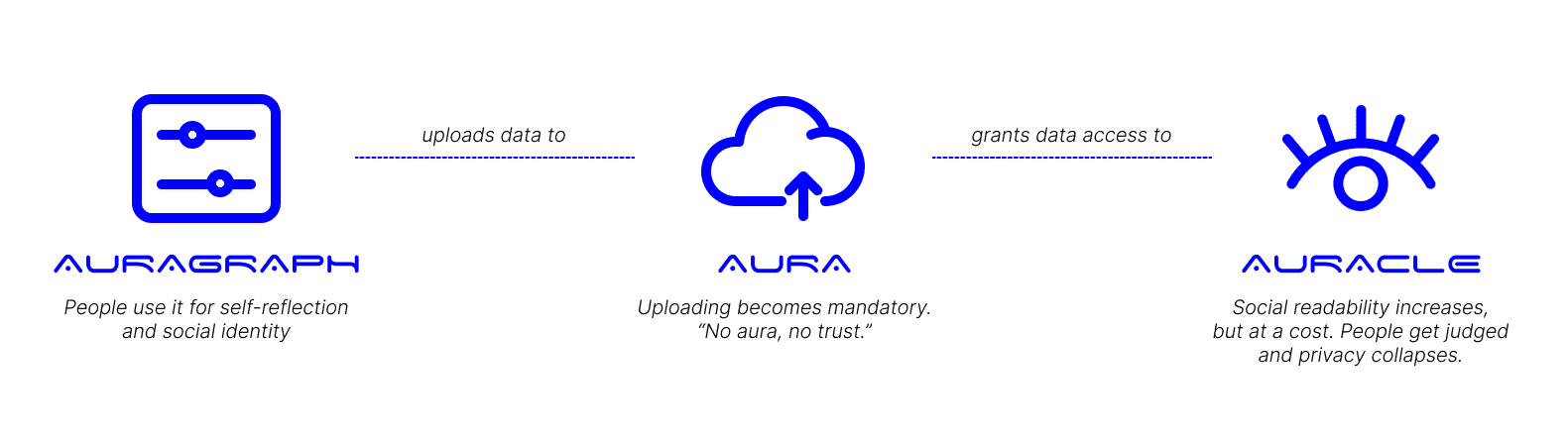
In this revised narrative, AURAGRAPH becomes a tool to upload an individual’s emotional data, generating a unique emotional signature that appears as an “aura”. Uploading emotional data to a system named AURA becomes mandatory. Citizens are expected to remain “emotionally transparent”, as this transparency is framed as proof of safety, trustworthiness and social responsibility.
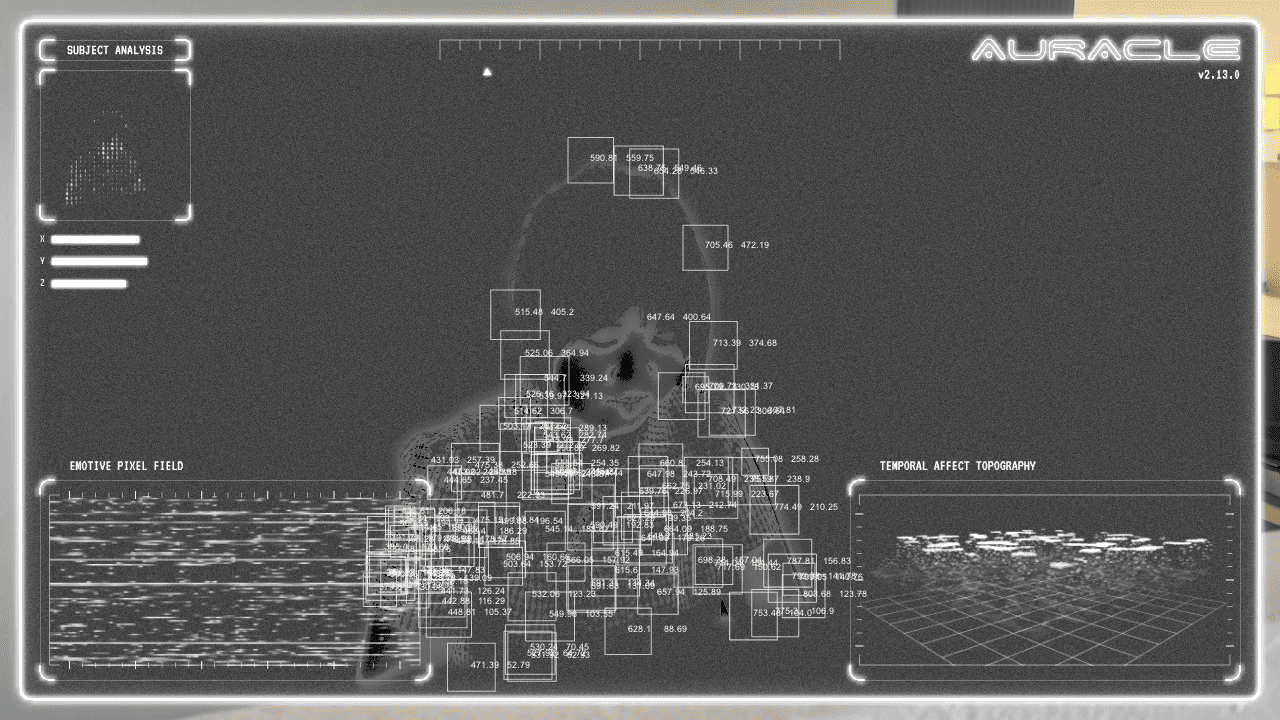
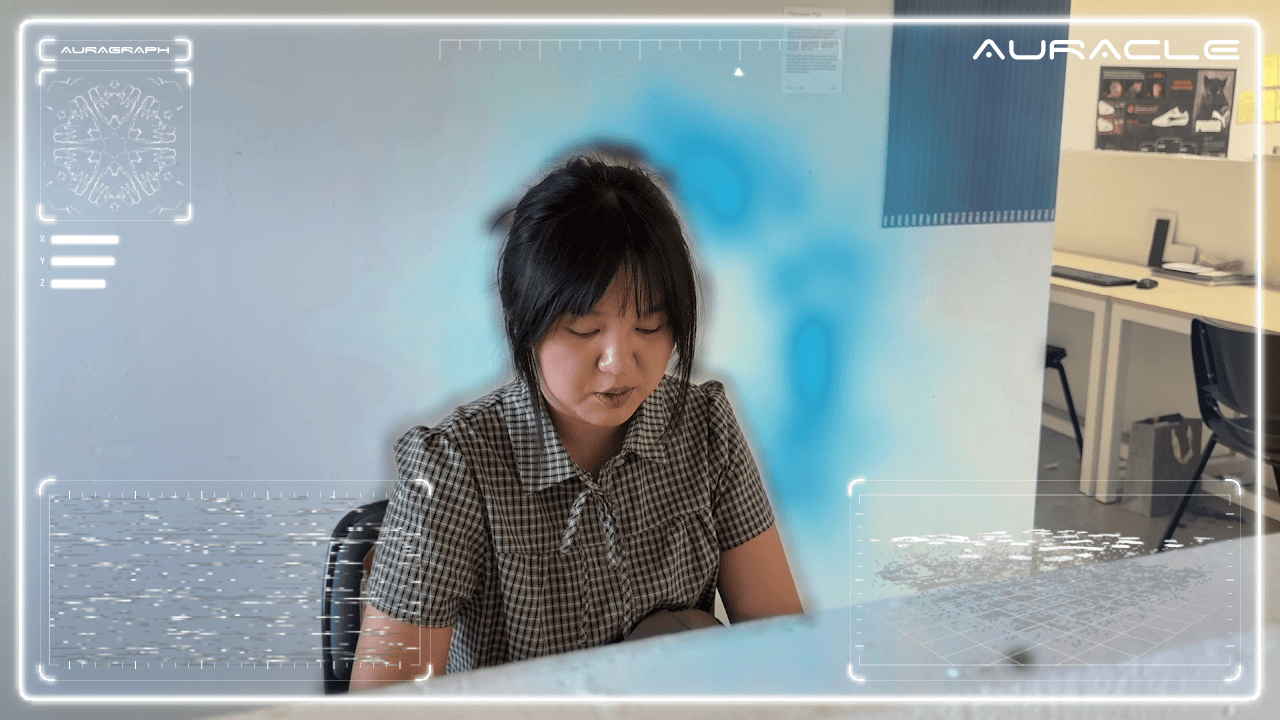
Once uploaded, emotional signatures become publicly accessible through AURACLE, an emotion-sensing eyewear. It allows users to view the emotional states of others in real time. In theory, this technology reduces ambiguity in everyday social interactions by making emotions visible and readable.
With this more structured relationship between the prototypes, the narrative begins to evoke a sense of discomfort and vulnerability. If emotional data is constantly collected and publicly displayed, questions surrounding privacy, ethics, social pressure and control inevitably arise.
For instance: What happens if a citizen refuses to upload their emotional data? What if someone’s aura appears volatile or unstable? Would others avoid them? Would AURA intervene? These speculative tensions are precisely the kinds of questions I hope the audience begins to consider.
UPDATING THE INTERFACES
With the narrative clarified, I needed to revise the interaction and interfaces of both prototypes so that they reflect this new relationship. The connecting element between them is now the emotional signature and aura.
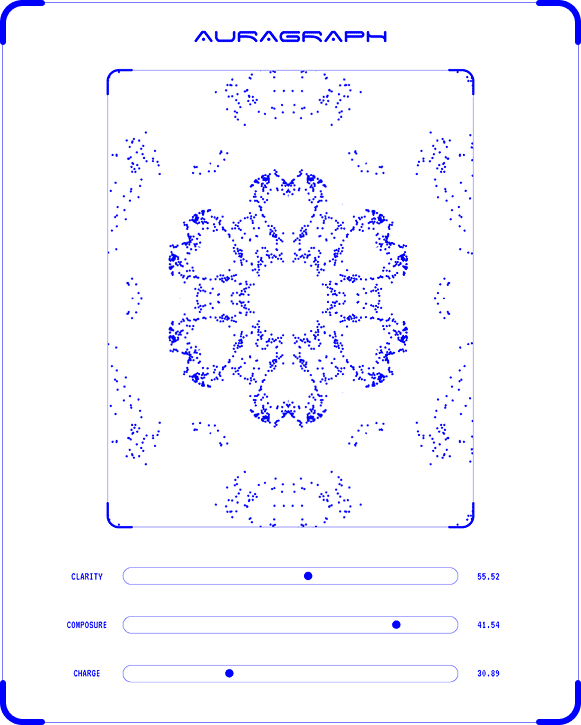

For AURAGRAPH, I replaced the previous generative visual with the symbol-generation system developed in last semester’s Experiment 005 EMO.GIFS. In this version, the generated symbol becomes the user’s emotional signature. At the same time, as the users manipulate parameters through the controller, the system will reinterpret these inputs to correspond to the aura colour.
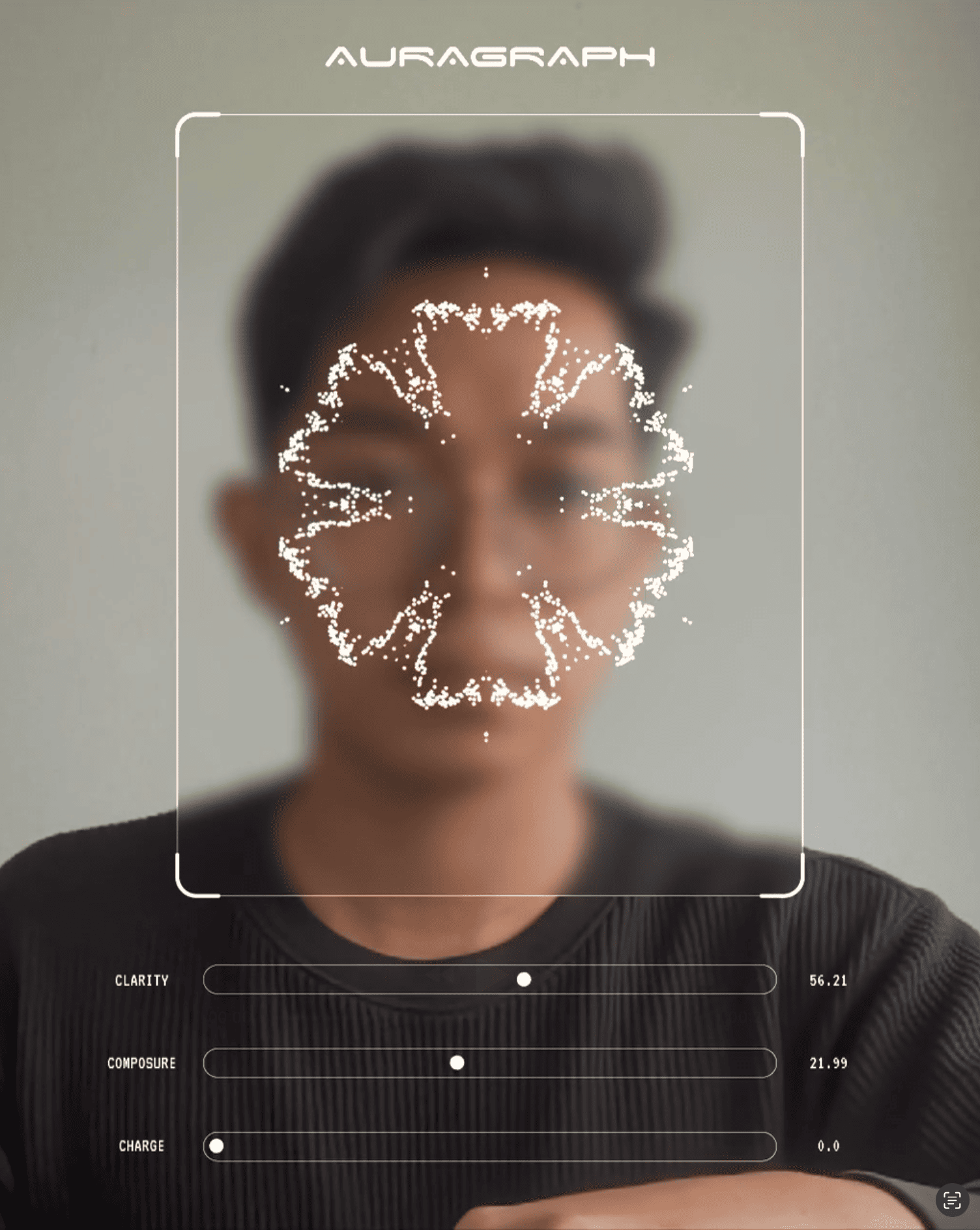
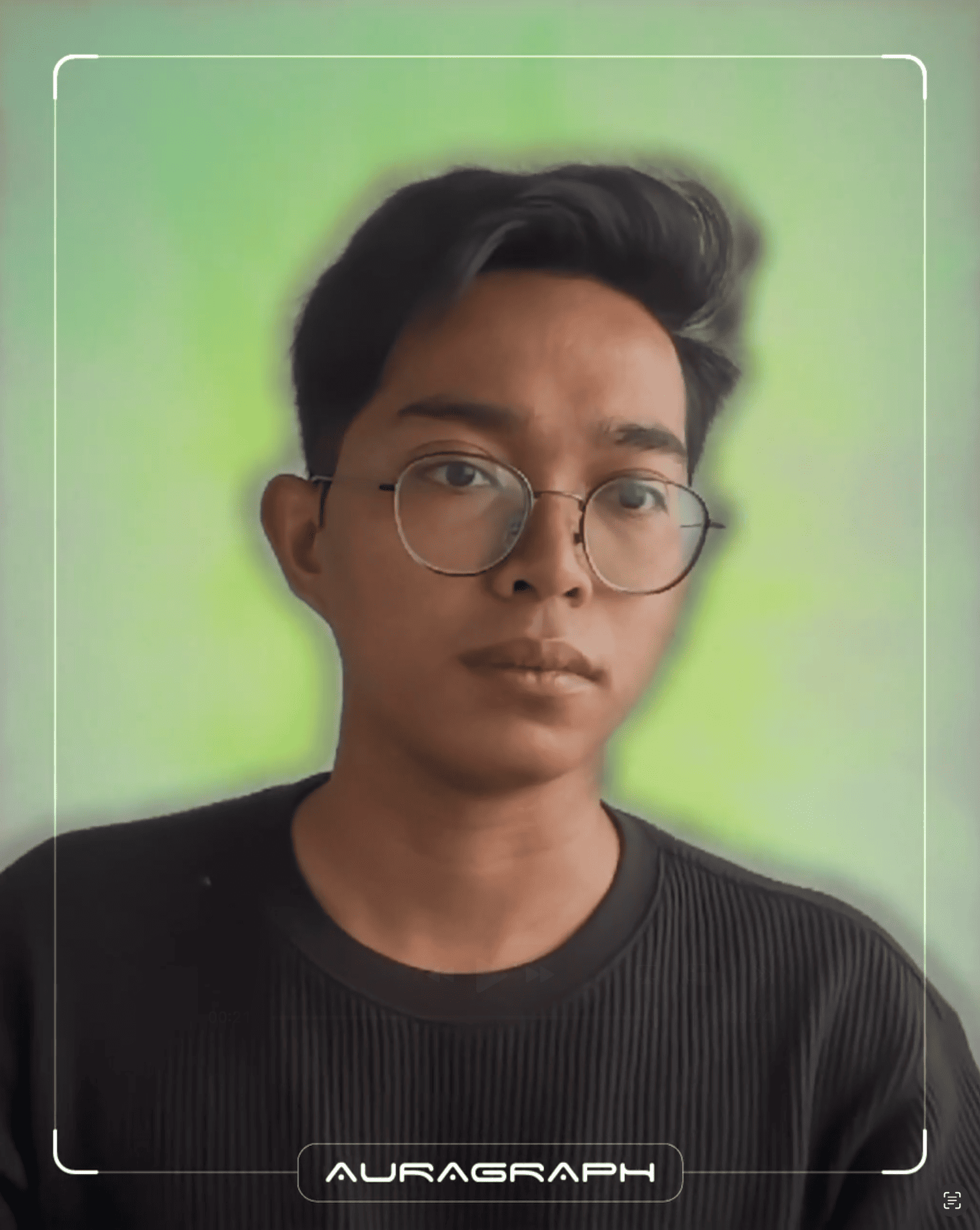
The controller parameters now represent different emotional attributes:
① CHANNEL allows users to choose the symbolic form they resonate with at the beginning of the mapping process.
② CLARITY represents the user’s mental clarity. Low clarity causes the symbol’s lines to disintegrate into particles, while high clarity reconnects them into a stable form.
③ COMPOSURE reflects emotional tension. High composure produces smoother lines, whereas low composure introduces distortion and buckling.
④ CHARGE represents emotional intensity. Higher charge increases the amplitude of the visual form, creating overlapping folds and layered structures.
Moving on to AURACLE, I updated the interface so that it retrieves and visualises the emotional signatures. The previous use of ASCII for subject analysis visuals has been replaced with the emotional signature generated by AURAGRAPH, while the gradient map has also been replaced with the user’s aura. This reinforces the idea that the eyewear is accessing the stored emotional data within AURA.
HOW DO I FEEL NOW?
With the revised narrative in place, I feel significantly more confident about the direction of the project. The prototypes now feel more interconnected and purposeful, rather than existing as separate experiments.
Of course, there will likely still be gaps or logical loopholes to address along the way. However, the core structure now feels much stronger. More importantly, the system raises meaningful speculative questions about emotional transparency and technological mediation. With this clearer framework, I was also able to revise my design statement to better reflect the project’s intentions.