EXPERIMENT 006
For this round of experiment, I was inspired by the concept of heatmap scanning. It is a technique of data visualisation that uses a system of colour-coding to represent varying values. What drew me to this technique is how it translates abstract data into something visually intuitive, allowing complex information to be read and understood almost instinctively through colour.
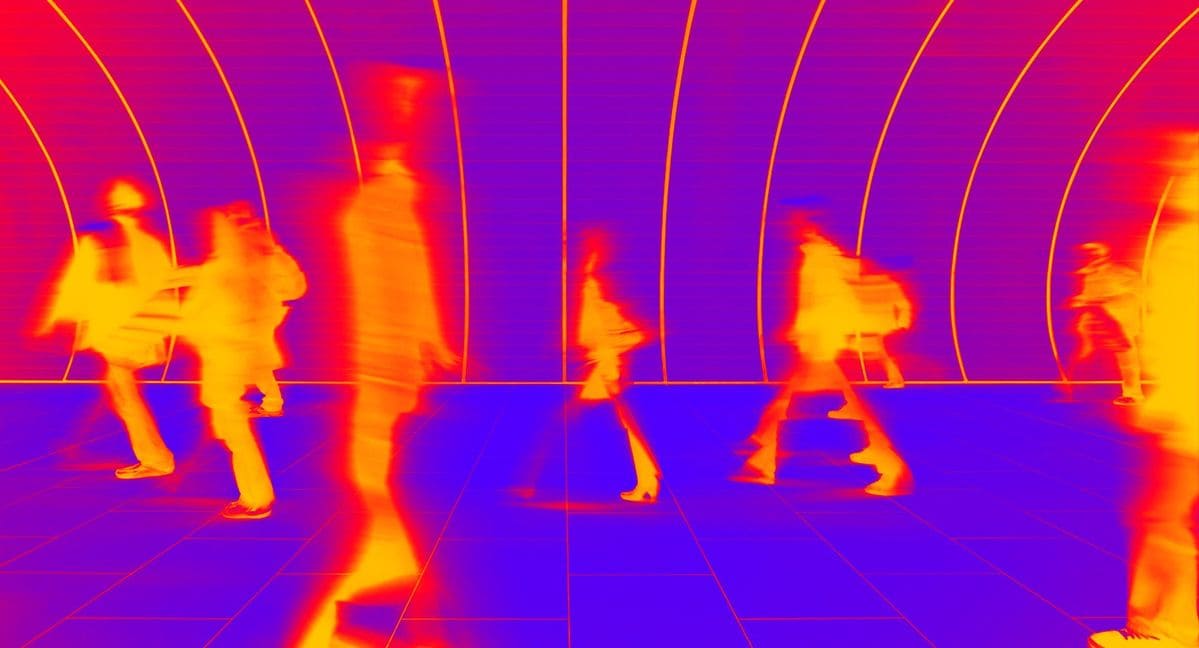
Building upon my previous exploration in Experiment 005 where emotions were expressed through symbolic forms, this experiment shifts focus towards representing affective data as a visual field; using colour gradients and noise to visualise emotional intensity. The aim was to create a more visceral representation of emotion, one that captures both type and intensity through movement and hue.
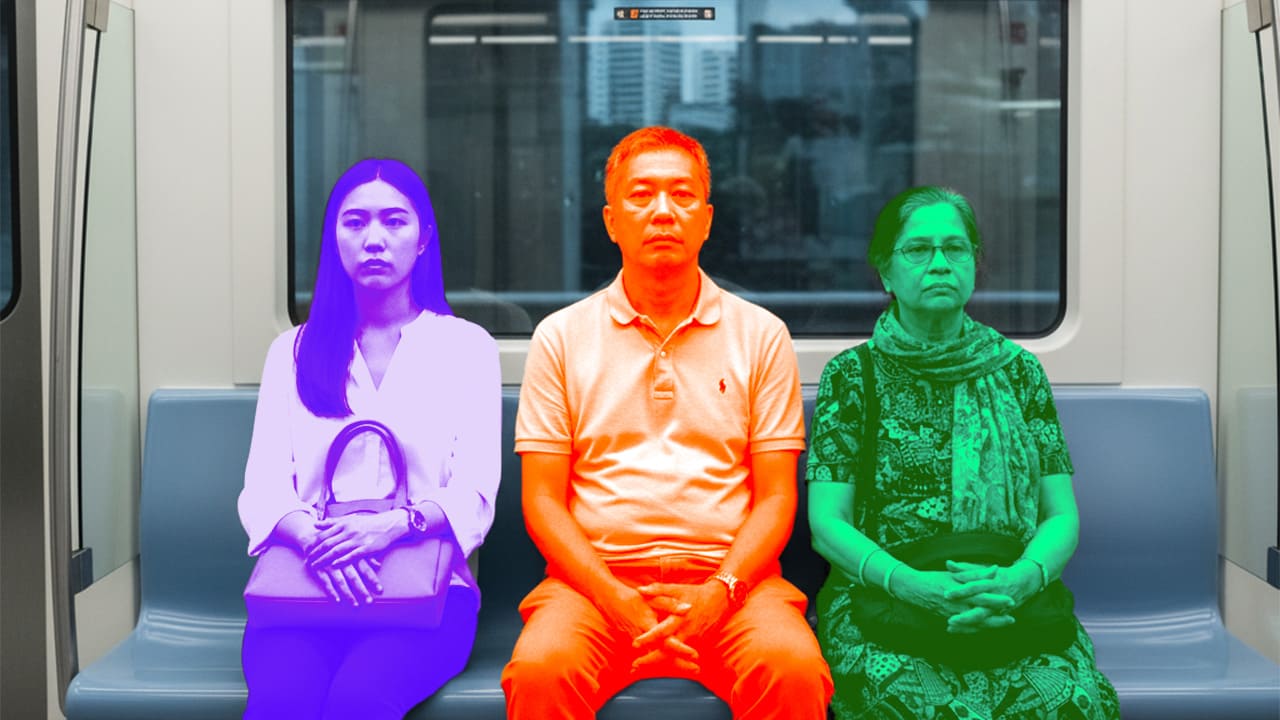
Similar to Experiment 003, I wanted to use colour as a visual language that makes invisible emotional states visible. I believe that colours carry inherent emotional weight. They evoke instinctive, psychological reactions that cut across language and culture. By mapping emotions through gradients and intensity, I wanted to explore how colour can mirror the depth of one’s internal state. This approach allows not only recognition but also reflection, helping audiences intuitively sense emotions.
The setup of my TouchDesigner system builds on the same logic structure I developed in Experiment 005. Using the same switching system, only one facial expression is detected at a time, activating a corresponding colour gradient. Each gradient represents a distinct emotional state:

① ’mouthSmileLeft’ for smiling to indicate ‘happiness’

② ’browDownLeft’ for brows frowning to indicate ‘anger’

③ ’eyeWideLeft’ for eyes widening to indicate ‘surprise’

④ ’mouthShrugLower’ for mouth frowning to indicate ‘sadness’
Beyond just colour, I wanted to capture emotional intensity. I converted noise textures into geometric line formations, where the amount of noise corresponds to emotional arousal. Drawing from James A. Russell’s Circumplex Model of Affect (as previously adopted in Experiment 001), emotions with higher arousal display denser, more dynamic noise. On the other hand, lower arousal emotions produce calmer lines.
Finally, I overlaid the gradient ramp and noise patterns over the live camera feed. The resulting compositions merged the subject and their facial expressions with reactive colour and motion. This shows how inner states can be visualised in real time.
① Happiness portrayed by SYAFIQ
② Anger portrayed by ETHEL
③ Surprise portrayed by LAVEN
④ Sadness portrayed by SANNA
Similarly to heatmap scanning, I am fascinated by how emotions could be perceived as energy rather than expression. The visual metaphor shows how emotions are constantly in motion, layered and unstable. This experiment also made me consider how emotional transparency might affect human relationships in the future. If emotions can be visually projected like this, would it nurture empathy and honesty or create discomfort and exposure?
CONFUSED AS EVER
During this week’s consultation, Andreas and I reviewed both my latest RPO draft and my ongoing experimental efforts.
On the writing side, Andreas acknowledges that he understands the direction I am heading towards, yet the way I articulate my ideas may come across as too academic. He explained that many of us in class tend to write in an overly complex manner, trying to tackle too many themes and ambitions at once. He advised us that we should simplify our writing. Our ideas should be accessible and understandable, not buried under so much theoretical weight.
When we moved on to discussing my project experiments, Andreas commended my technical proficiency in TouchDesign has improved significantly. He could see that i have developed a stronger visual and procedural language. However, he pointed out that my current explorations only fulfil the first half of my research subtitle:
“The visualisation of emotions through generative art and speculative lens to evoke reflection and empathy among adults with limited emotional literacy”
So far, my experiments focus mainly on “visualising emotions through generative art”. They are aesthetically engaging, but they stop short of addressing the speculative or empathic dimensions of my research. Andreas question: How does my work actually evoke reflection or empathy? and In what way does it help adults with limited emotional literacy?
These questions struck me deeply because it made me question myself: Have I not done enough research? My process has been very visual but perhaps not as conceptually anchored as it should be. At that moment, I felt confused and defeated.
For now, I need to pause, reorganise my thoughts and strategise my next moves…