MOOD MIRROR: OUTCOME
Picking up from where I left off, I decided to prepare a small printed outcome for consultation with Andreas. I created a double-sided, four-panel zine, featuring: a cover page, a brief description, a section to explain microexpressions and visual representations of each emotion generated through TouchDesigner.
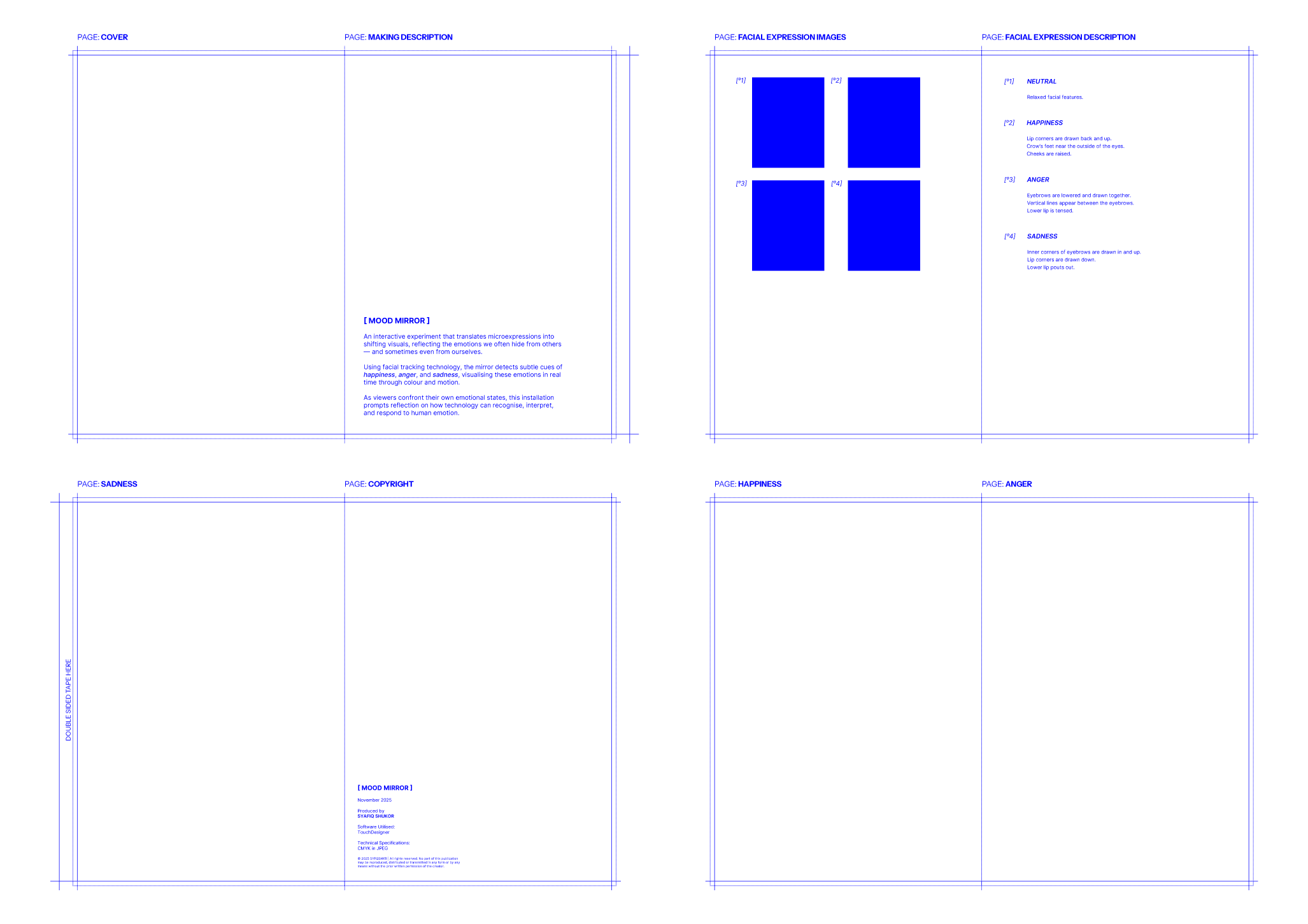
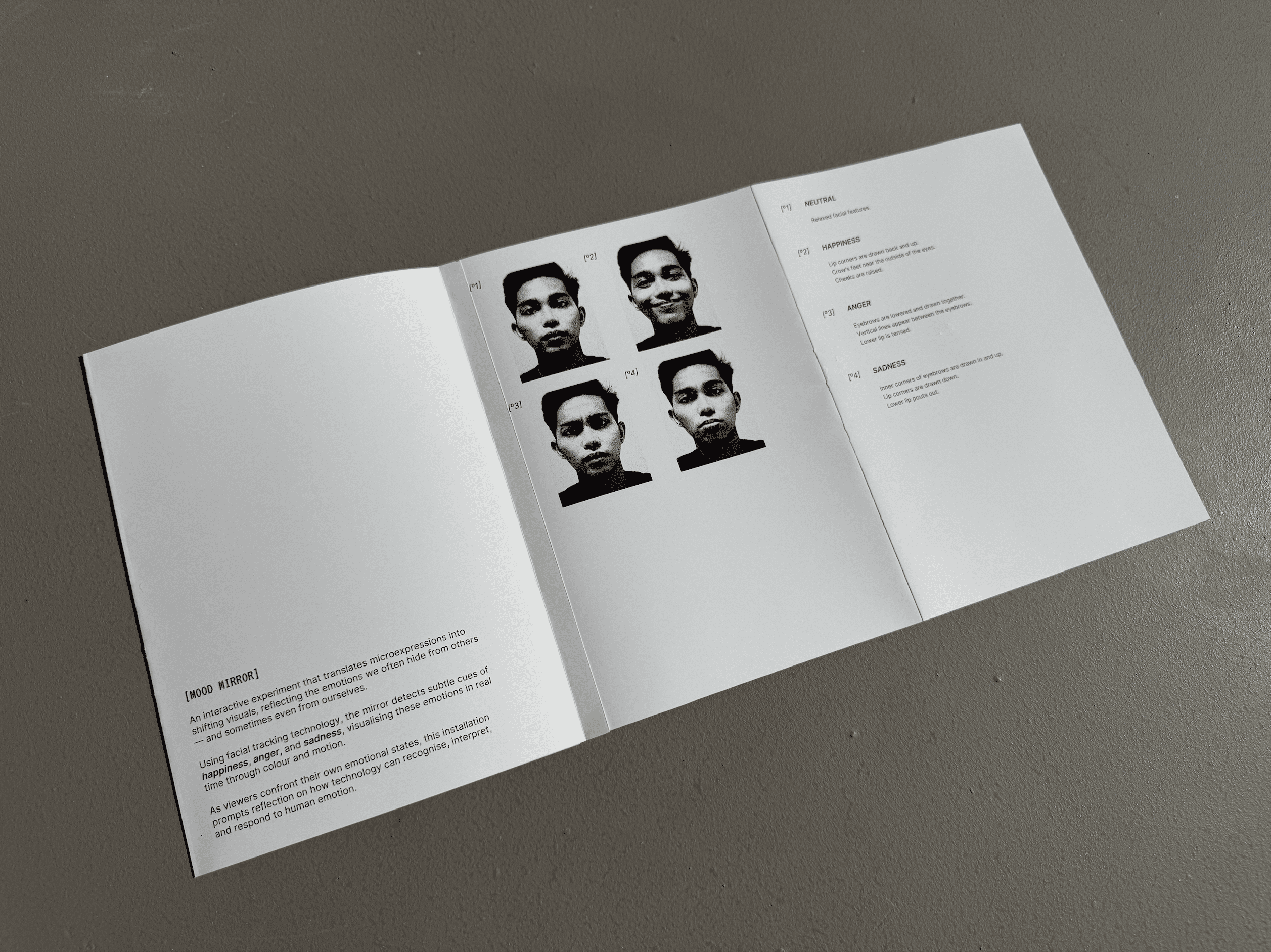
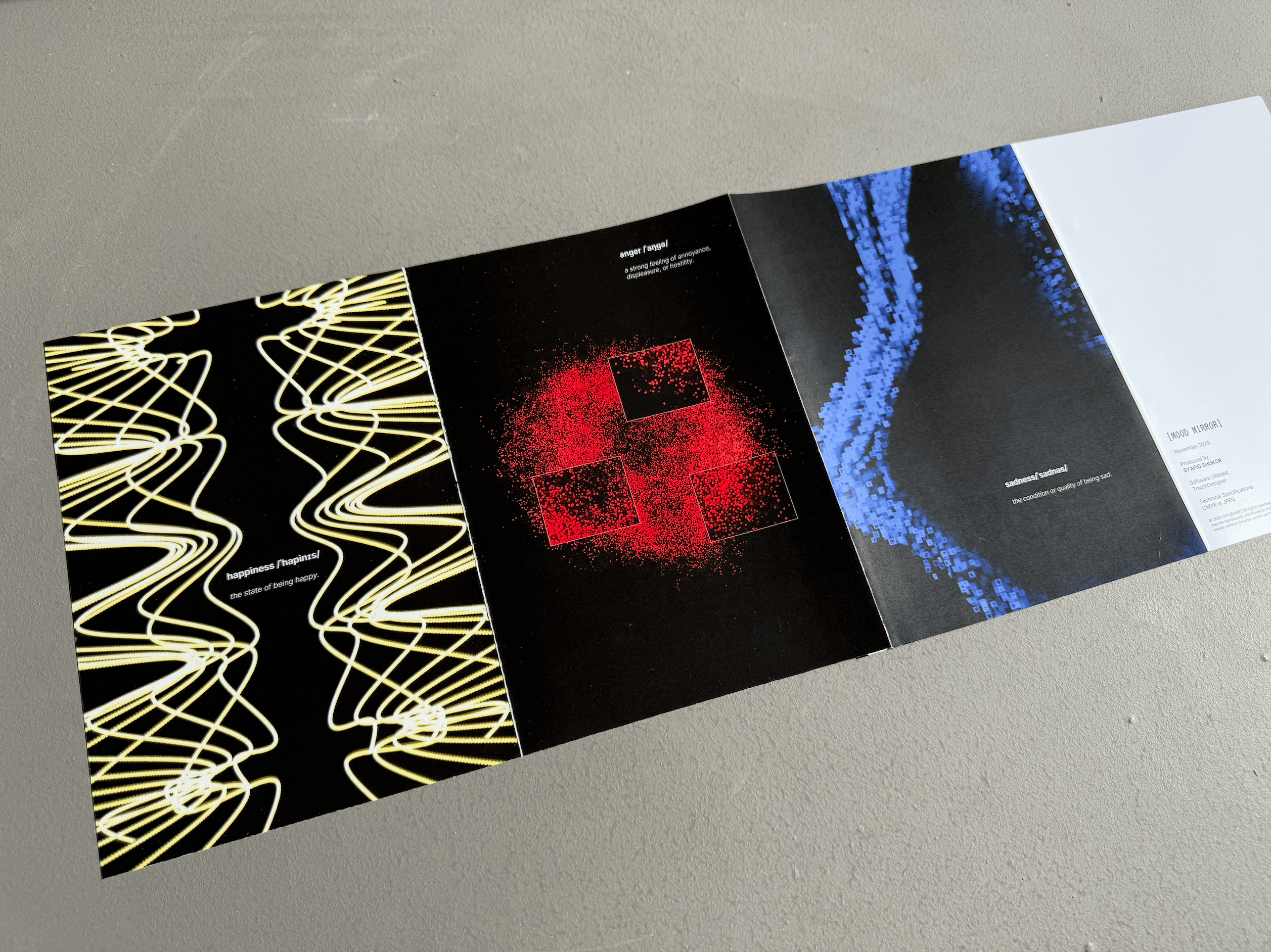
Designing the zine helped me translate a digital, interactive concept into a tangible artefact. It gave me a chance to practise layout composition and visual storytelling, which also helped clarify the structure of my presentation slides.
MOOD MIRROR: FEEDBACK
During consultation, Andreas shared thoughtful feedback. He appreciated the storytelling aspect of my documentation slides, mentioning that they were more engaging than the printed piece. However, he pointed out that what I created technically was a pamphlet and not a zine — explaining that zines traditionally use low-cost, non-glossy paper and have roots in subcultural or DIY publishing. They are often associated with self-expression, activism or underground movements, rather than polished presentation pieces. This clarification helped me understand the cultural context of zine-making and reminded me to be more precise with terminology and my outcomes.
Andreas also suggested that I extend the interactive element of the Mood Mirror. He proposed exploring tools like a MIDI controller, which would allow participants to manipulate or remix the visual outputs, creating their own renditions of emotion-based visuals. These outcomes could later be compiled into a publication — transforming the project from a passive display into an evolving, participatory artwork.
Overall, I left the consultation feeling encouraged and motivated. The feedback reminded me that my next step is to refine the purpose and experience of the Mood Mirror — to not only visualise emotions but to demonstrate why such a visual aid can be meaningful in promoting emotional awareness and self-understanding.
GUEST LECTURE BY STUCK.SG
The lecture Biases in Design: Health and Wellbeing explored how a designer’s personal, cultural and cognitive biases can unintentionally influence their design decisions, often leading to exclusion or misrepresentation. It emphasised the importance of recognising these biases and adopting a human-centred approach to ensure the design process remains empathetic, inclusive and responsive to diverse users — especially when addressing issues of mental health and wellbeing.
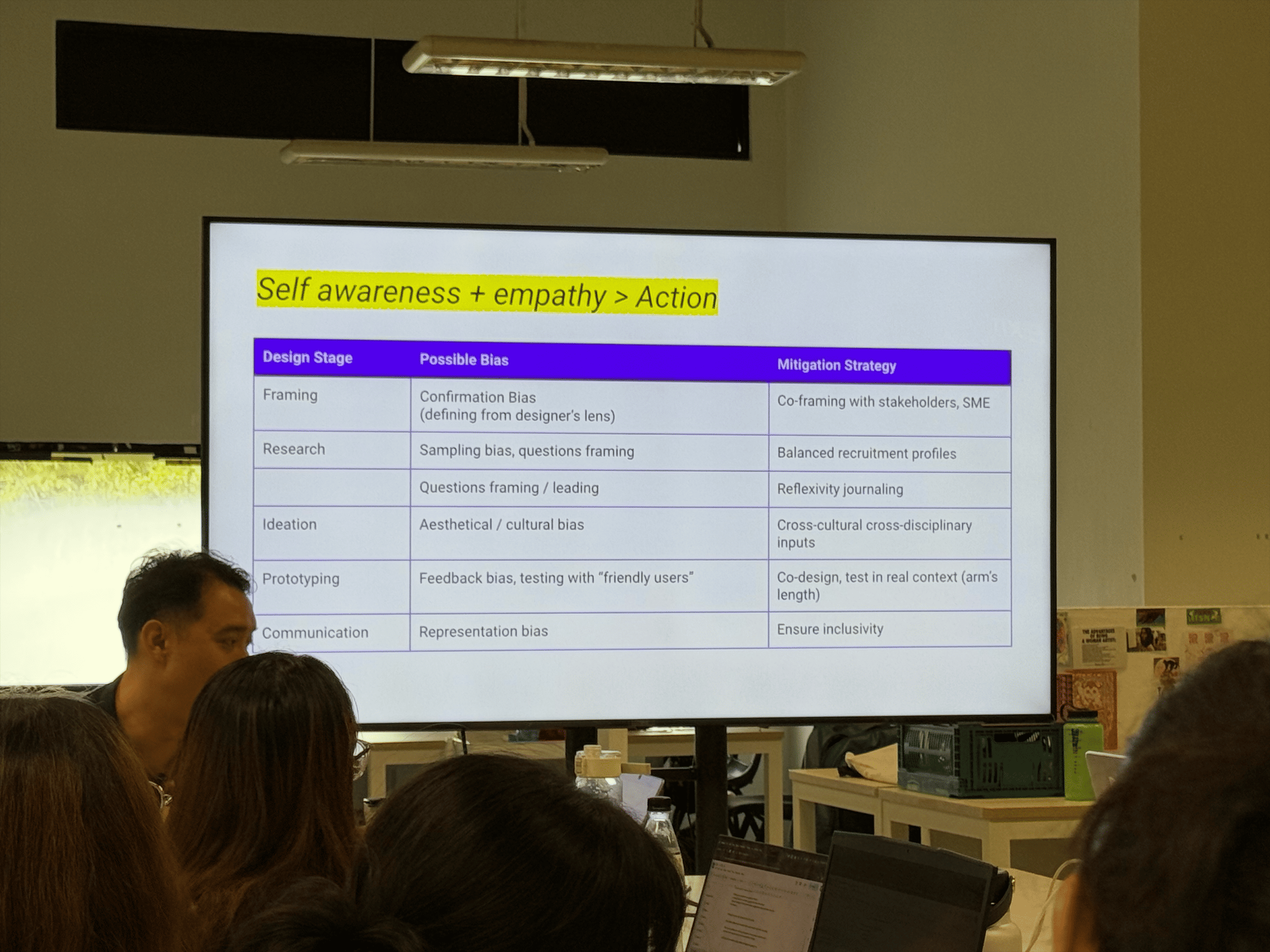
Interestingly, the session took a turn and became a therapy session. We were divided into small groups and asked to share a recent personal experience that made us feel unhappy or disappointed with someone. We were guided through questions such as:
① Why do you think the other person did what he did?
② What do you think the other person felt?
③ Why are you angry/disappointed?
After reflecting on these questions, we were asked to identify any biases that might have influenced our responses. The exercise revealed how our perceptions are often filtered through personal experiences and assumptions. In hindsight, this therapy exercise was not just emotional sharing. It was a way to heighten self-awareness and examine how hidden biases affect our judgements and design decisions.
Since my work deals with emotional awareness and self-reflection through technology, understanding bias in perception is crucial. It made me more aware that even emotion-recognition systems can carry bias — both from the dataset they are trained on and from the designer’s own interpretations of emotion. This session reminded me that as I progress deeper into this final year project, I should not just focus on the technology but also consider how people might interpret and react to the visuals based on their individual, cultural or emotional backgrounds.