SECOND GROUP CONSULTATION
After receiving the consolidated feedback for my second RPO draft, I realised that while my ideas are conceptually strong, there are several areas that still need clarification and alignment.
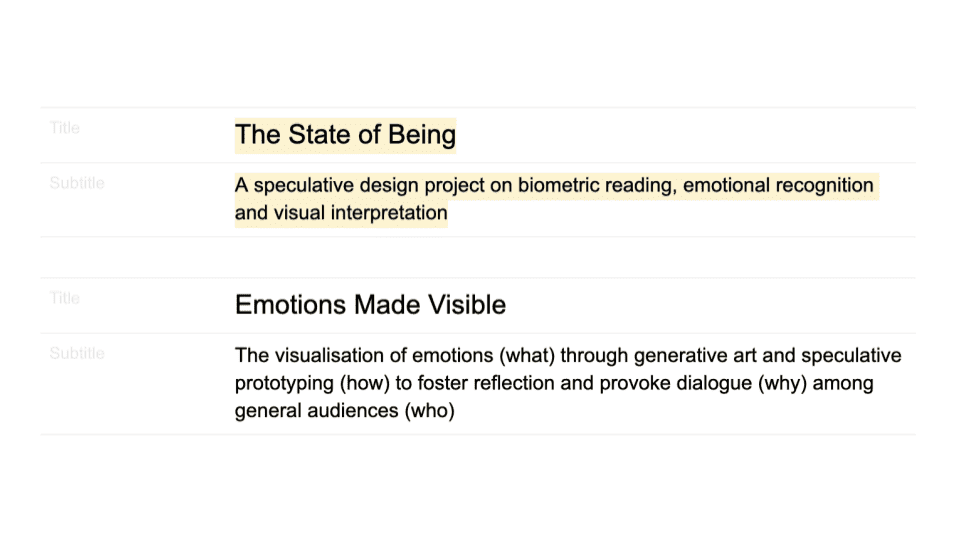
One of the main points raised was that my intended audience remains too broad, especially using the term ”general audience”. It feels vague and doesn’t reflect who I truly want to reach. Andrea’s comment on narrowing down the type of adult group I am addressing made me reflect on how crucial it is to define who my design is for, as this will influence the tone, medium and relevance of my project.
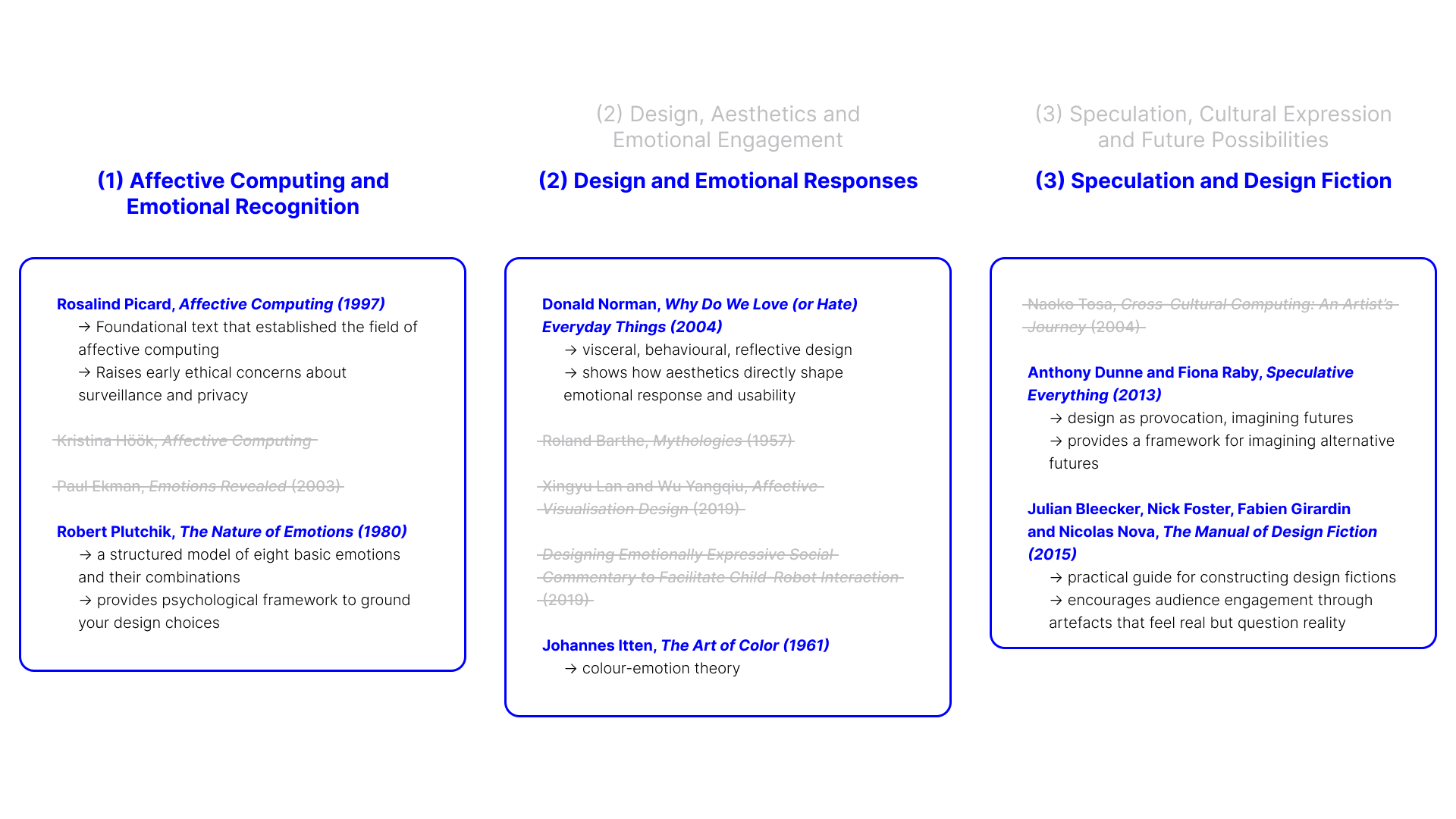
Additionally, it was noted that my three Research Pillars don’t explicitly connect to the topic of generative art that was mentioned in my subtitle. Andreas mentioned that my second pillar (2) Design and Emotional Responses should at least include a reading about generative art. This feedback reminded me that every part of the proposal, be it from title to readings, must work harmoniously to support one cohesive narrative.
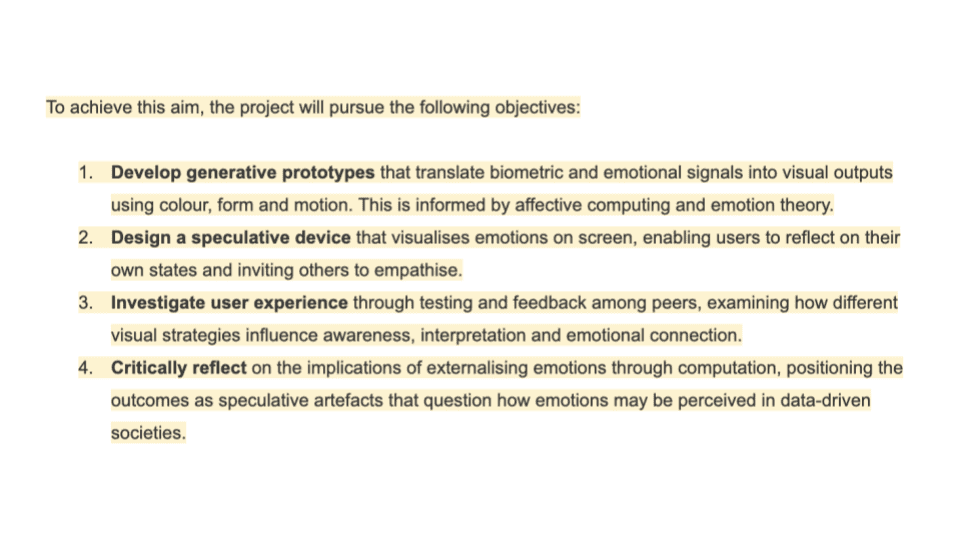
I also learned that my Research Objective was written more as approaches rather than clear outcomes. The feedback encouraged me to think critically about what kind of change I want my research to achieve. Is it about shifting perspectives? Deepening understanding? Influencing design practice?
Overall, this round of feedback helped me identify the inconsistencies in my proposal and the importance of precision in language and intent. It reminded me that beyond having interesting ideas, coherence is required for a proposal to be deemed strong and convincing. Every section, term and objective should align to tell one clear and purposeful story.
FORMATIVE ASSESSMENT
For the set up, I decided to keep the overall layout simple and organised.
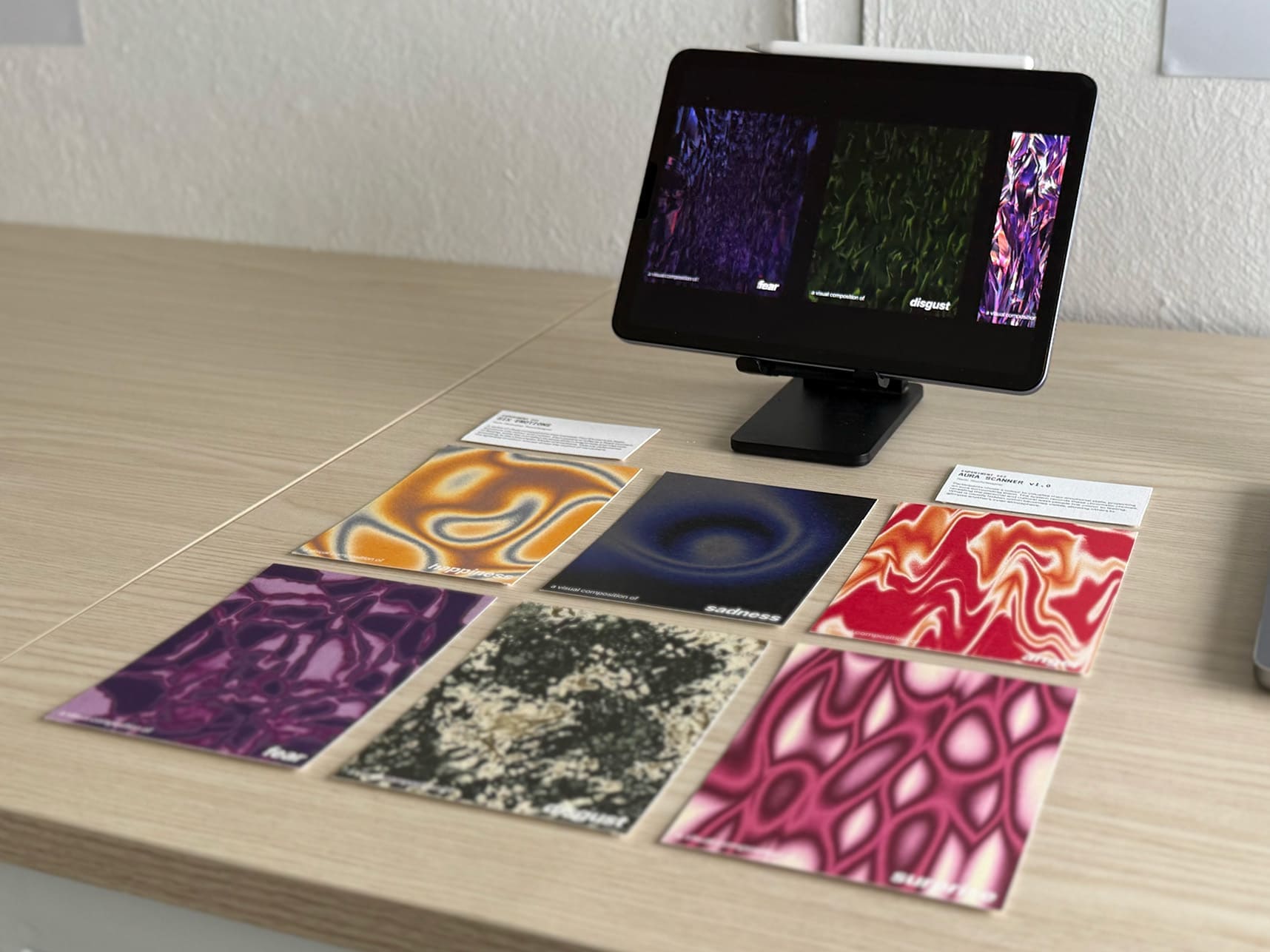
I printed Experiment 001's visual compositions created in Photoshop based on Paul Ekman’s six basic emotions and presented them as postcards. The animated TouchDesigner compositions were compiled into a looping carousel video and displayed on my iPad. Alongside this, I showcased a video compilation of my six participants from Experiment 002. Both experiments were accompanied by their printed descriptions neatly arranged beneath the iPad.
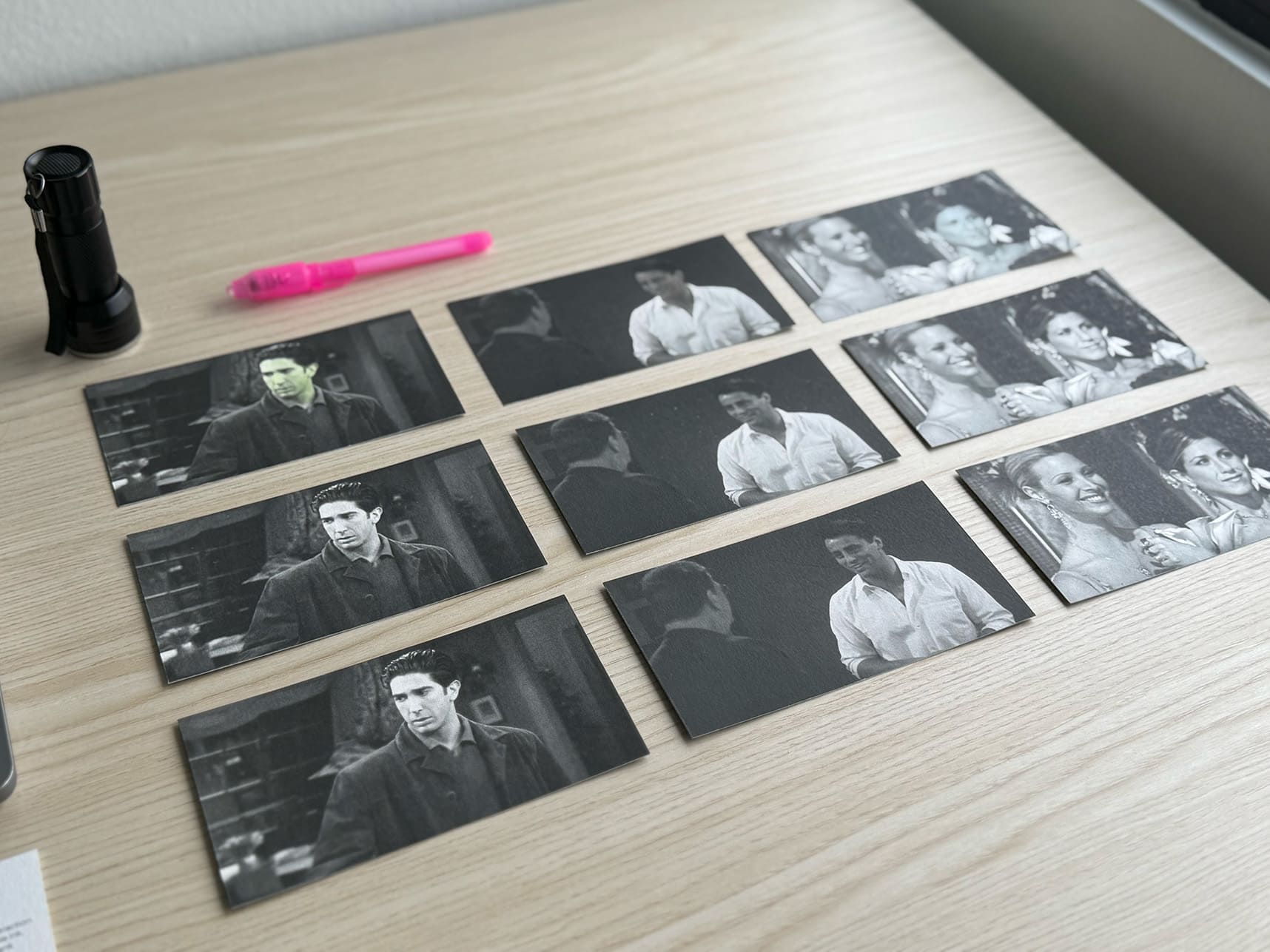
For Experiment 003, I presented the printed stills as a flat-lay arrangement on the table and placed an ultraviolet torchlight beside them to encourage interaction. Initially, I considered displaying the neon blacklight paints but the setup felt cluttered. Therefore, I decided to remove them to maintain clarity and focus. I also displayed the interactive system on my laptop alongside Experiment 004, switching between screens as needed. This was the most practical way to exhibit my TouchDesigners files at this stage. However, I am starting to worry that I may eventually run out of screens to present future experiments, as many of my upcoming works will likely be digital.
During the critique, Andreas seemed pleased with my current progress. He suggested that I include video documentation of my experiments featuring peer interactions as my work fundamentally explores the relationship between humans and systems. I think this suggestion is useful as it showcases how people experience and respond to my installations.
Moving forward, I also wanted to challenge myself to produce more printed outcomes to complement my digital works. Even a simple bi-fold publication could help me practise my design sensibility in layout and print presentation. While my projects are largely digital, I believe it is equally important to present them tanglibly to communicate my process as a designer.