OMG, IT’S OPEN STUDIOS!!
Open Studios was both exhausting and eye-opening. I didn’t expect such a large turnout and I made an effort to stay at my table as much as possible to present my work and respond to questions. The first two days were relatively manageable but the crowd significantly increased on the third day, making it more physically and mentally demanding.
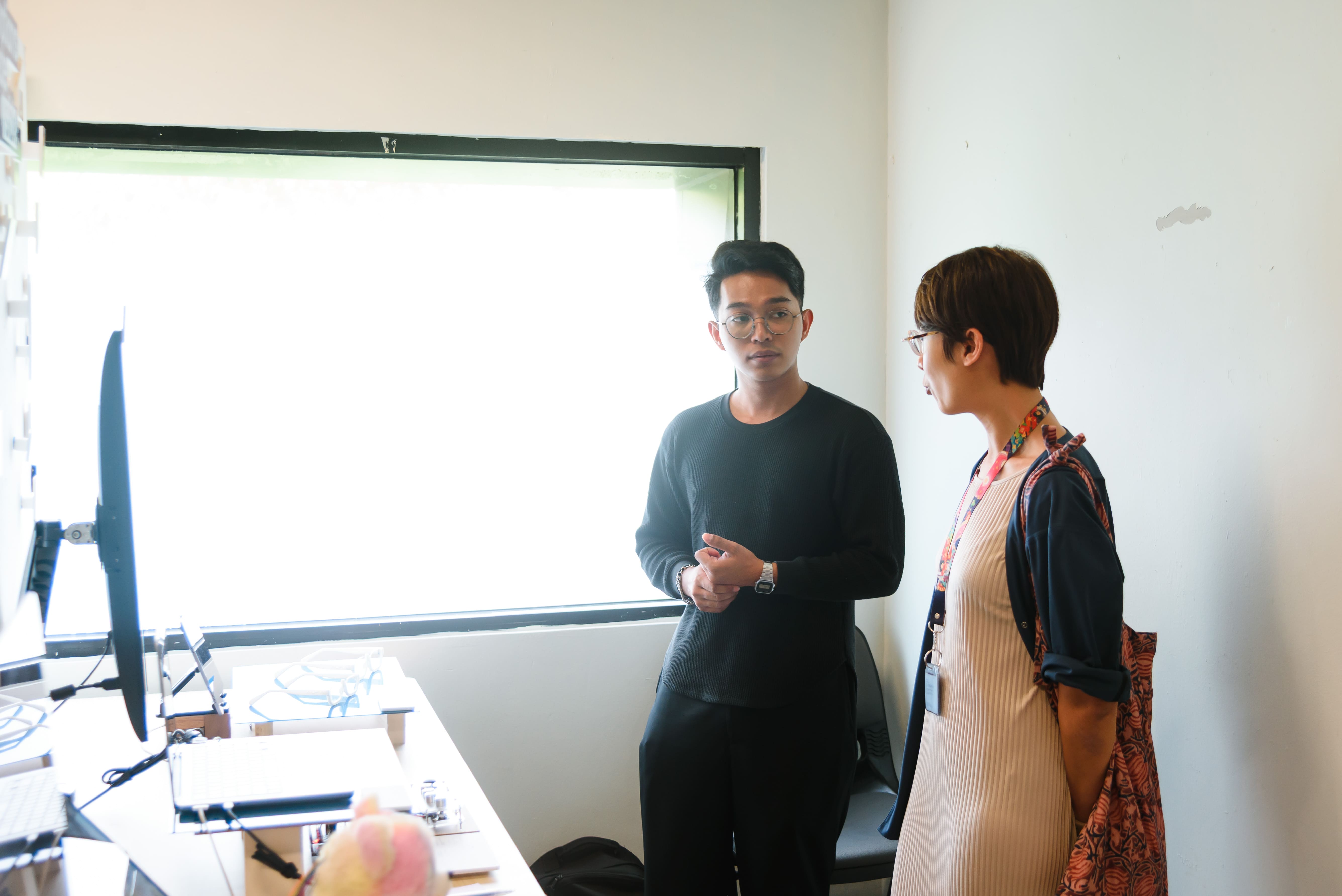
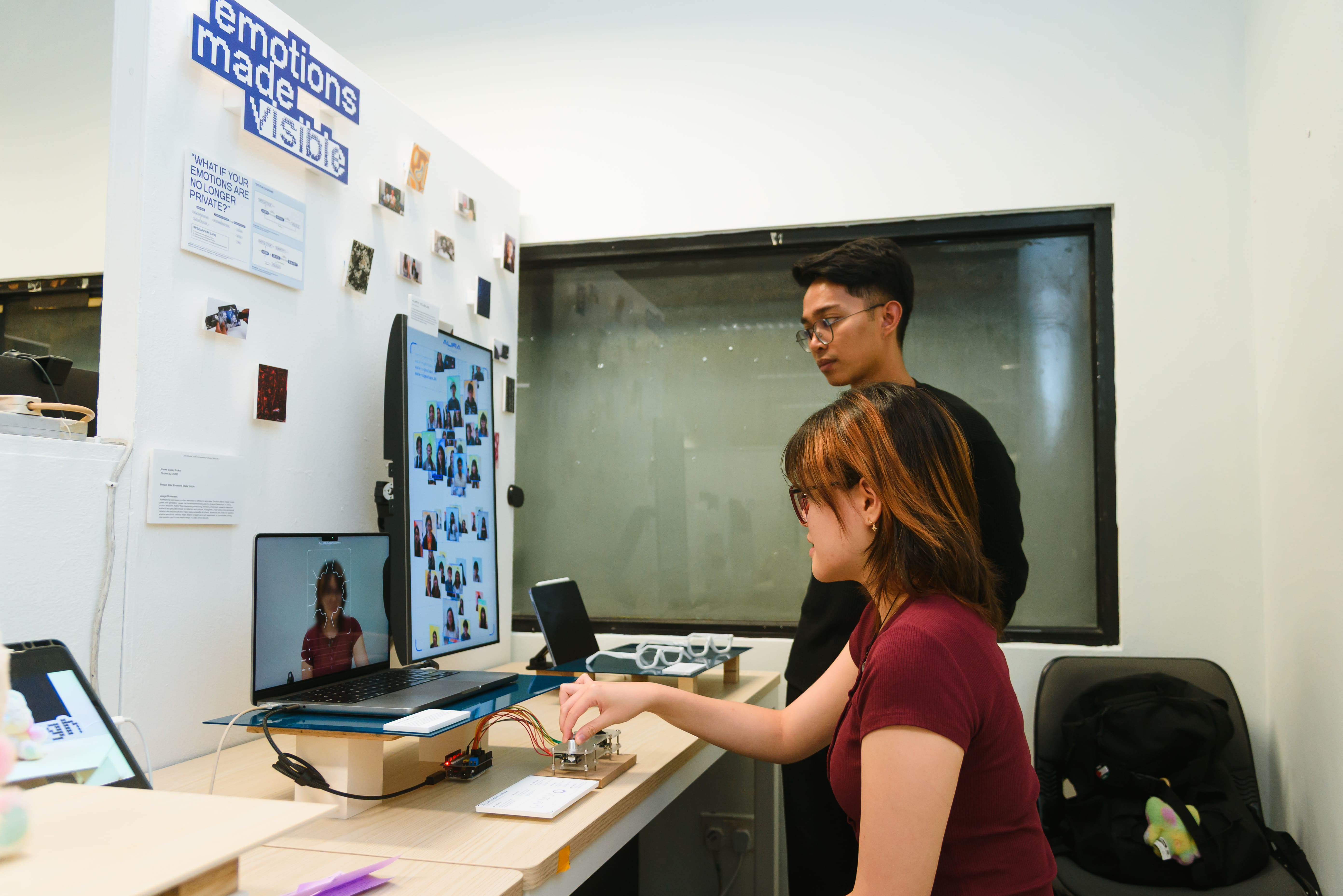
To be honest, I didn’t receive as much critical feedback as I had hoped. Most visitors described the project as “cool” and “interesting” and many found the narrative easy to follow. While this was reassuring, I also felt that the speculative nature of the project limits deeper critique because the artefacts exist as provocative statements rather than practical tools.
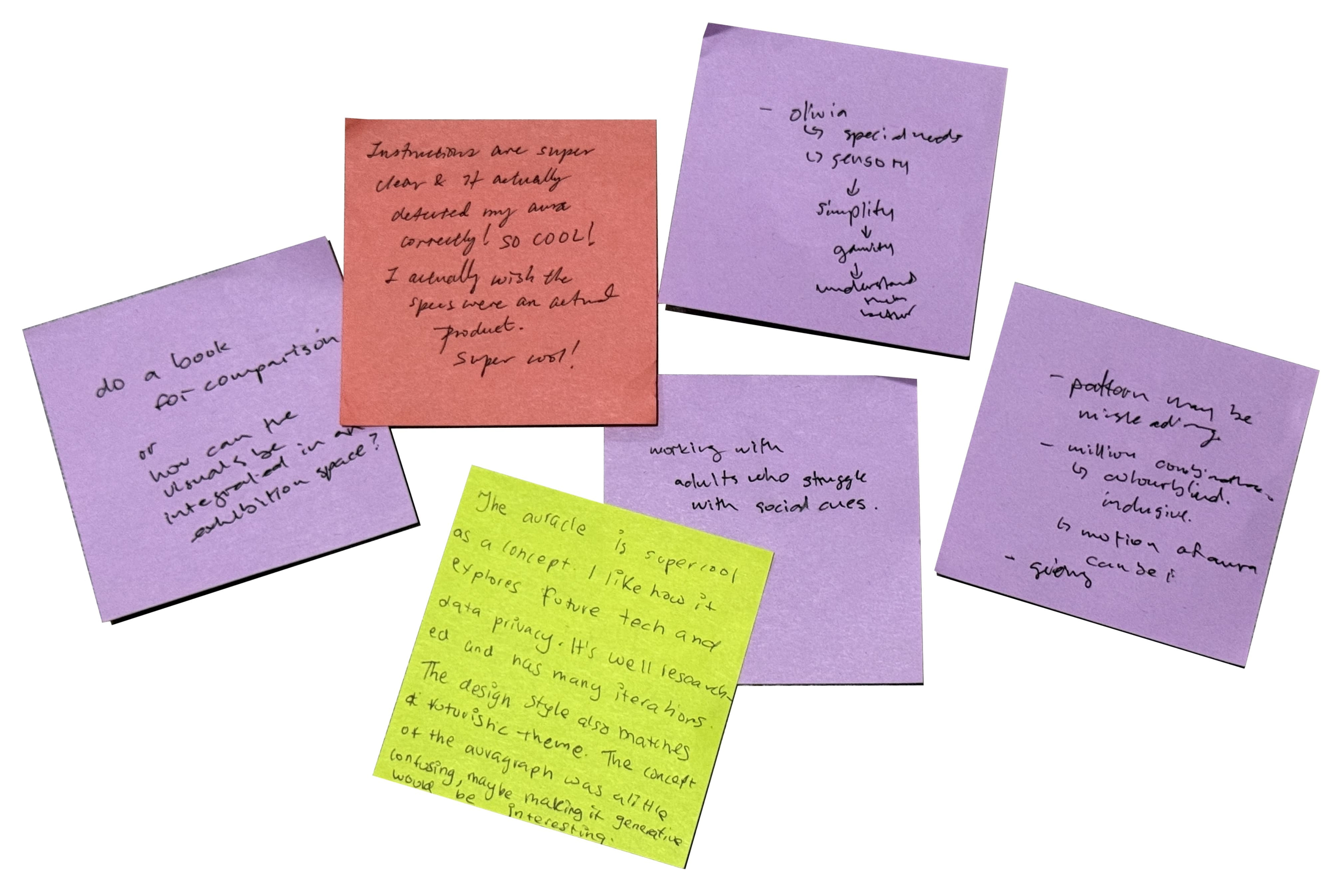
However, I did come across a few conversations that gave me valuable insight:
① Speculative vs Practical Direction — Several visitors, including Olivia, asked whether the project could be developed in a more practical way. Some suggested its potential application in supporting individuals who are neurodivergent, particularly in understanding non-verbal communication. This was interesting to me as I had previously considered working with non-verbal children with autism but chose to step back due to practical limitations. Hearing this reaffirmed that the project holds potential beyond speculation, even if that is not its current focus.
② Next Steps after Open Studios — Alumnus who visited my table asked about my plans moving forward. I shared my uncertainty regarding publication and they suggested expanding on what is already working, which is the use of video. Since the AURACLE concept video was effective, they encouraged me to create similar videos for other components. They also proposed developing fictional collaterals such as promotional materials to further “normalise” the idea of emotional data being uploaded in this speculative world.
TABLE SETUP FEEDBACK
Andreas provided feedback on my table setup to help guide improvements for the final presentation.
He pointed out that the current setup lacks immediate visual clarity and that my narrative is not clearly communicated at first glance. Instead of relying on small descriptive texts, I should use strong headlines to guide the audience through the setup.
Another key takeaway was to design the setup from the audience’s perspective. I need to consider what they see first, how their attention is guided and how easily they can understand the project without explanation. Given the complexity of my work, simplifying the presentation is essential to ensure the core idea is communicated quickly and effectively.
Andreas also highlighted that the concept video for AURACLE works well as a storytelling tool and suggested creating a similar one for AURAGRAPH to strengthen clarity and consistency across the project.
Moving forward, I plan to explore multiple setup options by developing a few layout scenarios, each with a distinct narrative structure. This will help me evaluate the most effective way to present my year-long project within a 7-minute presentation. Therefore, the different layout scenarios should focus on clarity, simplicity and stronger storytelling.
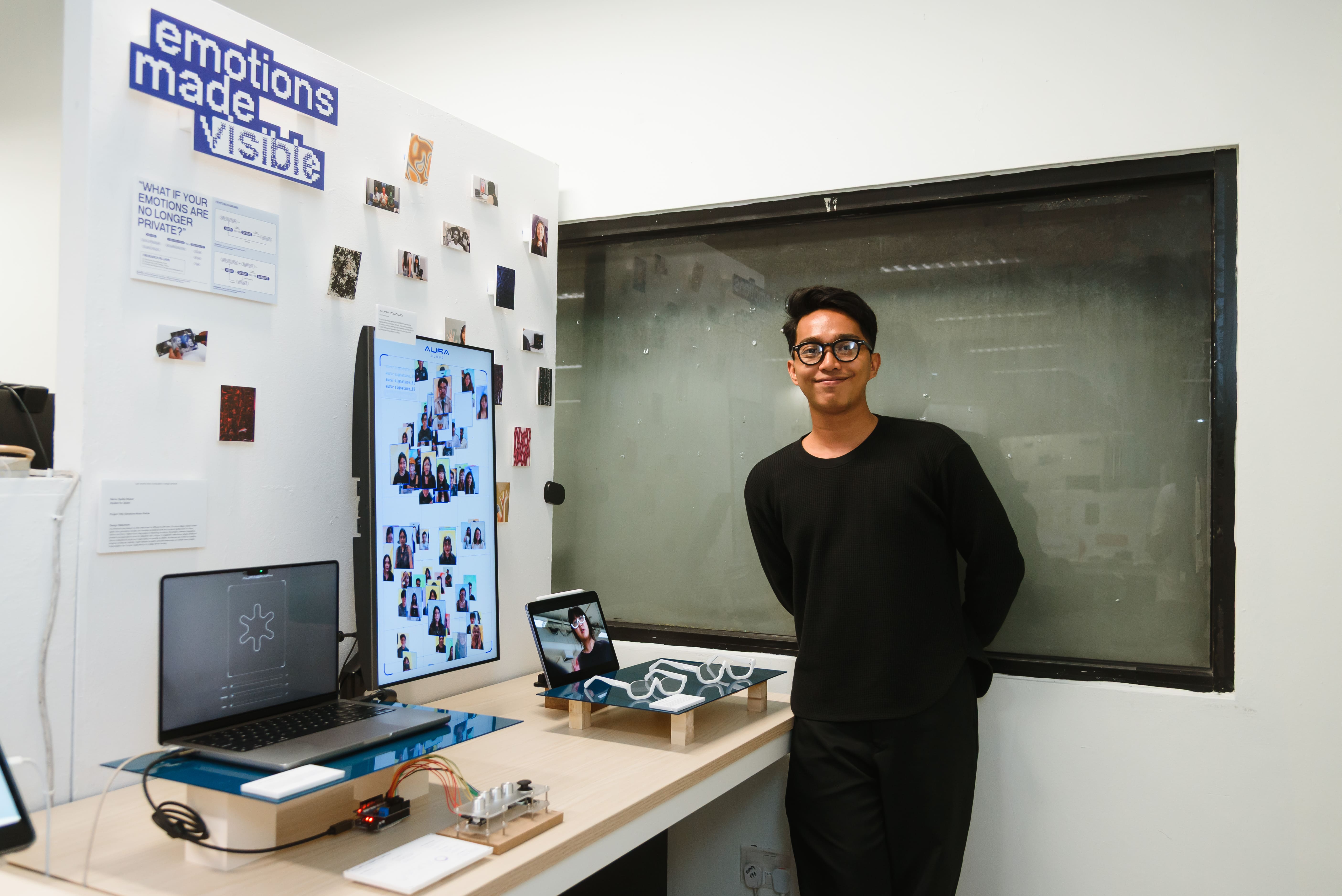
Overall, despite the challenges in the past few weeks, I am proud of how far I have come and how the project has evolved. Open Studios gave me a clearer sense of what works, what needs refinement and how I can move forward with greater focus.