PAVING MY DIRECTION
Since last week’s dilemma, I have been thinking a lot. In a productive way, of course. Over the past few days, I have managed to identify a rough but clearer direction for the project. Instead of fixating on a single outcome, I decided to work towards making THREE interconnected artefacts that together form a speculative system;
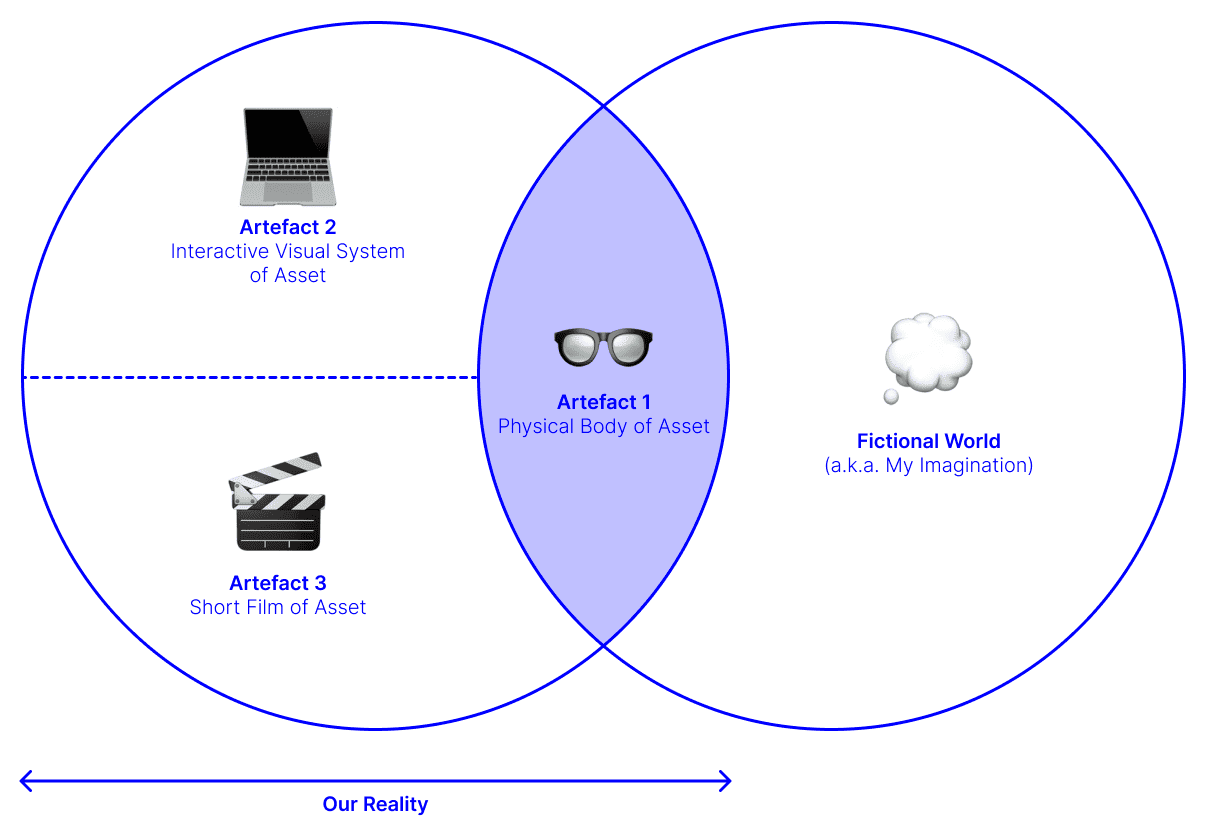
① Artefact 1 — The main ‘asset’. I was proposing a pair of goggles that allow users to “see” other people’s emotions. This object will not be functional. It exists purely as a diegetic prop. Its role is to physically anchor the speculative idea in our reality, giving the concept a tangible form.
② Artefact 2 — The visual system represents what users in the fictional world would experience through the goggles. In the narrative, this system operates automatically. However, in our reality, I want to recreate this experience by allowing users to manually map their own emotions. This will be controlled through an Arduino-based controller. I am also considering collecting these emotional states to produce a small, report-like catalogue.
③ Artefact 3 — The short film acts as a lens into the fictional world. It demonstrates how the goggles function within that universe and visualises what the wearer perceives, helping audiences understand the speculative premise without needing the system to fully exist.
When I shared this direction with Andreas, he seemed more convinced that I had a clearer sense of my final outcome. He encouraged me to make the narrative more concrete, as this would ease both the storytelling and prototyping process. He also suggested using voiceovers in the short film. While I understand how voiceovers could support a documentary-style approach, I currently feel more inclined to present the film as a product advertisement within the fictional world. I will continue to consider both options as the narrative develops.
STARTING WITH ARTEFACT 02
Continuing from where I left off, I expanded the controller by adding a fourth potentiometer and a joystick. Integrating the additional potentiometer was relatively smooth as I was able to apply what I had learnt from last week’s making. The Arduino and TouchDesigner read the new values without any major issues.
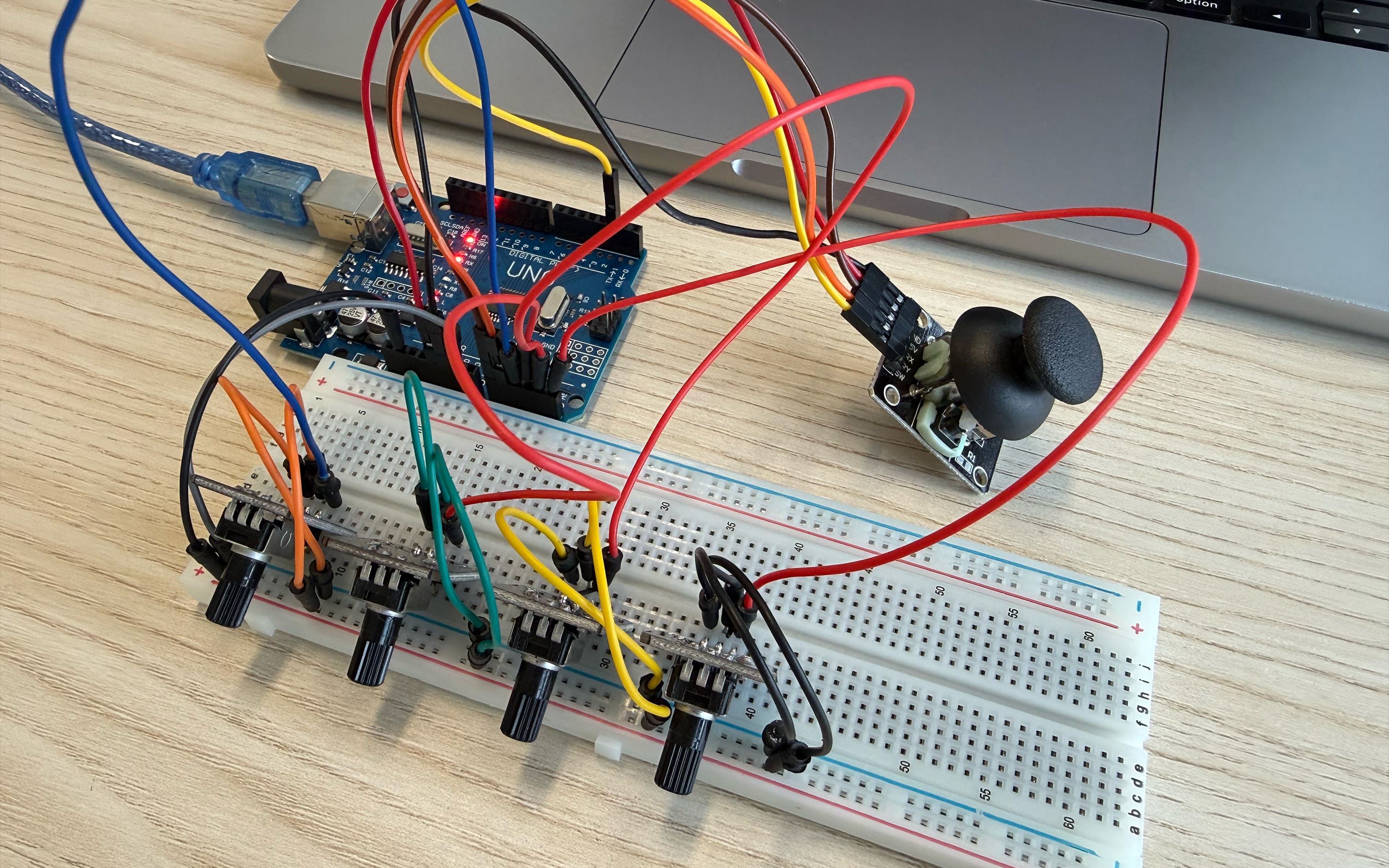
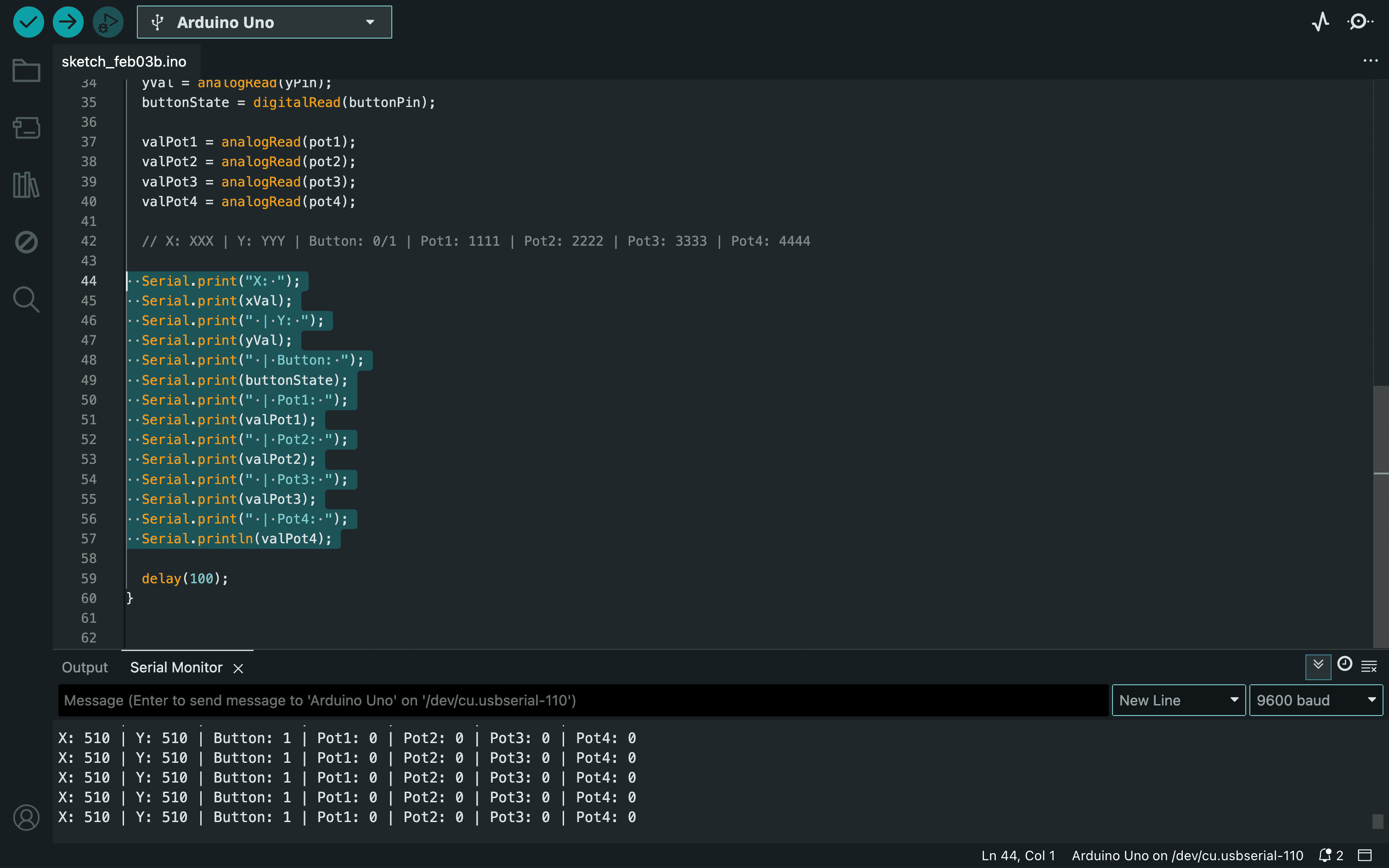
However, the joystick introduced a new challenge. While I could move a rectangle freely across the screen, it would consistently snap back to its original position at (X: 510, Y:510). This is because the joystick is spring-loaded and always returns to its midpoint, which caused the visual to reset as well. I realised that the issue was not the joystick itself, but how I was referencing its values. Instead of mapping the joystick directly to the rectangle’s position, I needed to reference its coordinates relative to the camera node. Once I made this change, the movement became much more stable.
With the controller functioning more reliably, I shifted my focus towards designing the visual system interface. I began sketching interface layouts and developed new TouchDesigner sketches to replace and enhance earlier versions.
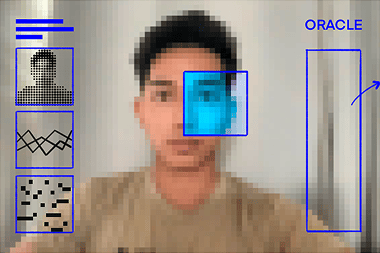
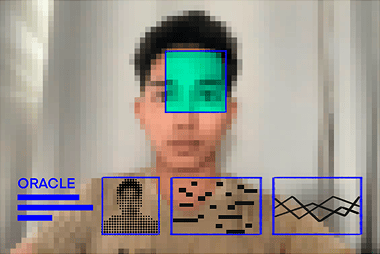
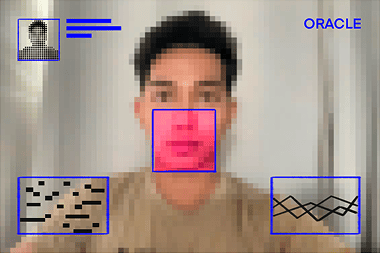
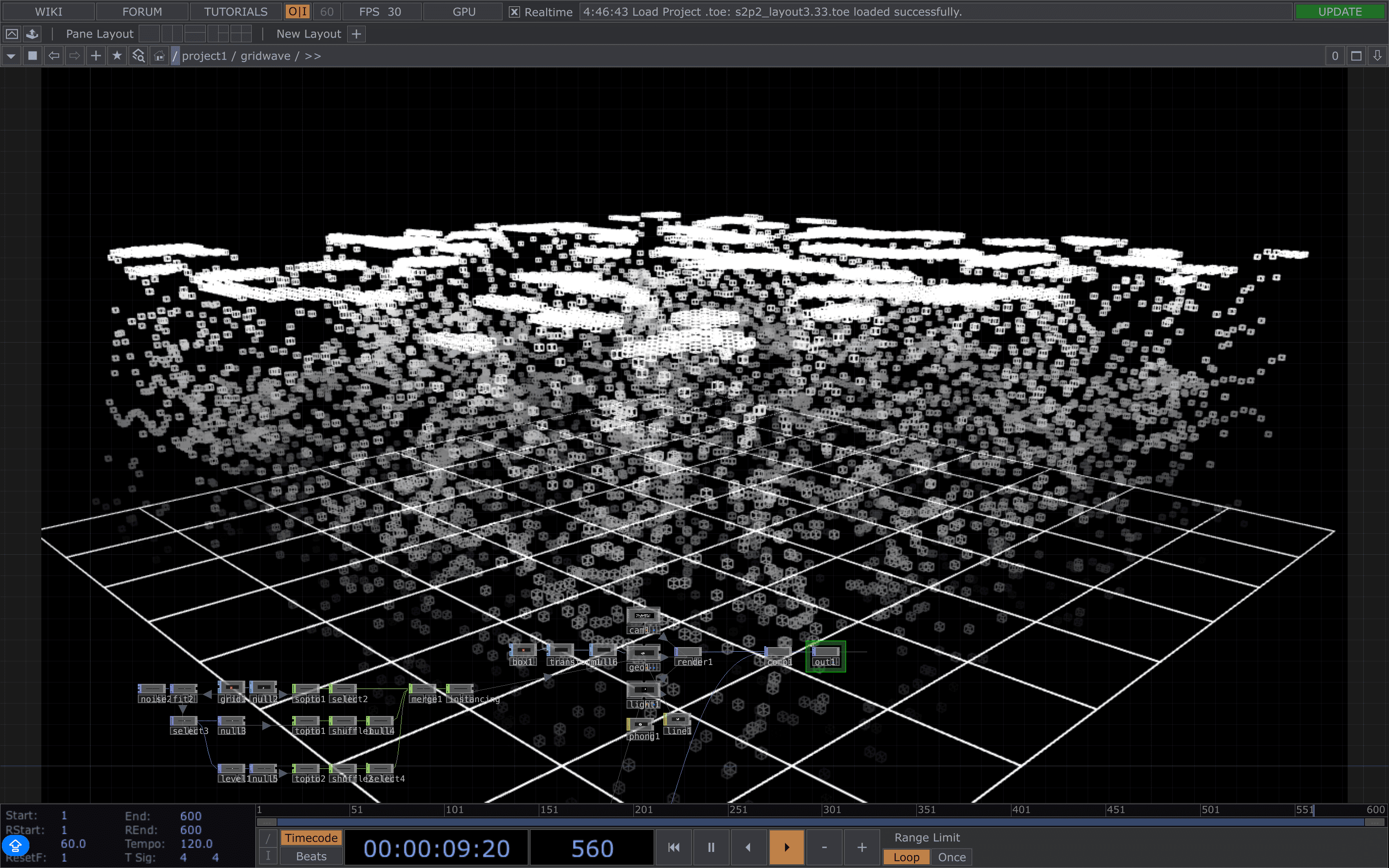
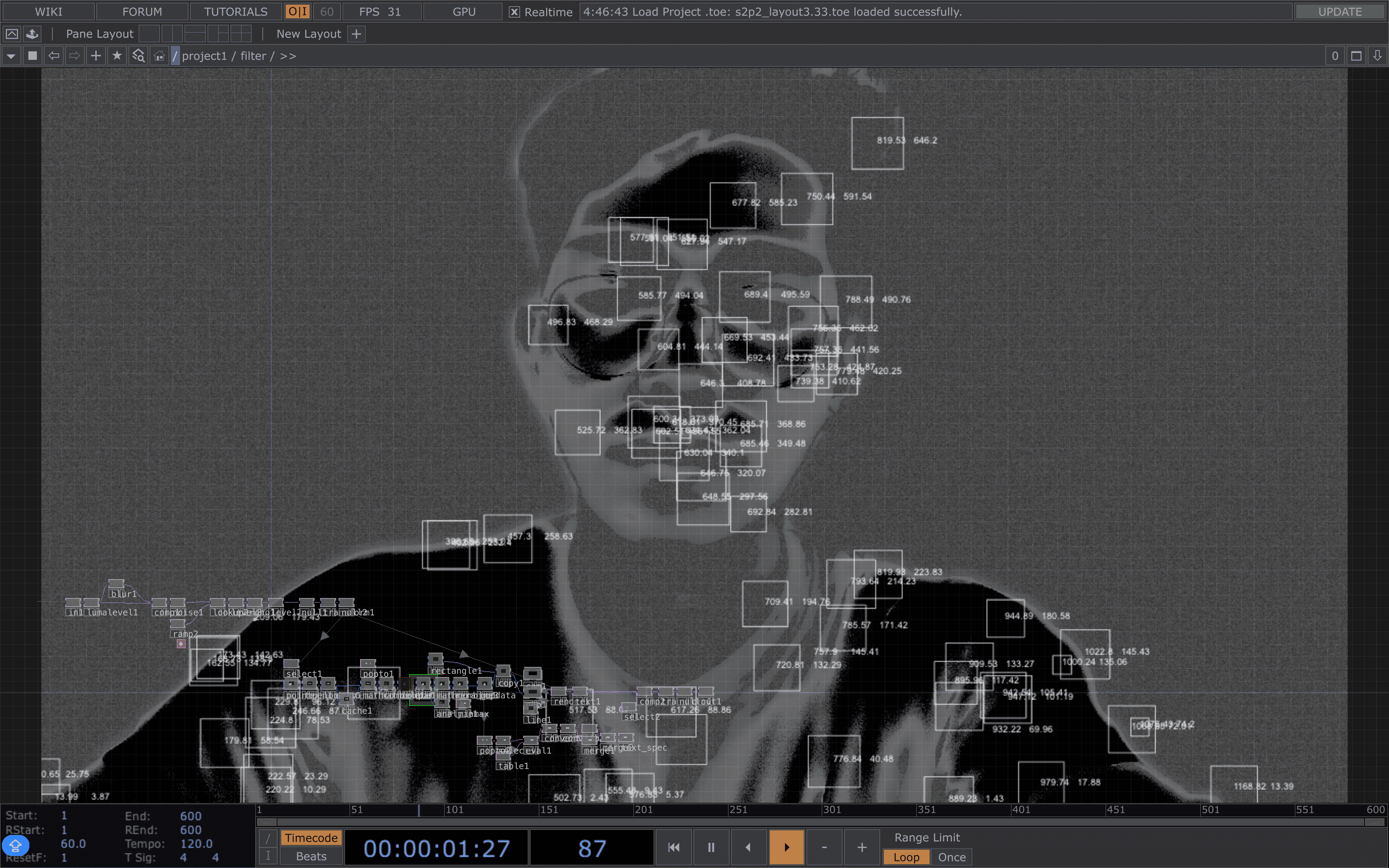
At this stage, I am generally pleased with how the visual system is shaping up, but I feel there is still room to push it further, especially in making it feel more futuristic. I also encountered another technical issue where the joystick-controlled masking occasionally flies out of the screen, causing misalignment between the physical input and the visual output. This highlighted the need for more precise constraints and calibration within the system.
During consultation, Andreas questioned whether the blob-tracking effects were random. At the moment, they are as the blobs respond to threshold changes in the camera input. However, this made me realise that i have yet to integrate facial tracking into this prototype. This gave an opportunity to map the blob behaviour to facial expression so the system responds meaningfully to the user.
I am also still undecided about whether colour should be introduced into the system. This hesitation stems from the fact that the speculative narrative surrounding the artefacts has not been fully defined yet. Without a clear narrative and context, introducing colour may feel premature or superficial.
Moving forward, my next steps are to;
① Finalise the narrative of the artefacts and begin thinking about its branding
② Refine and complete the design of the visual system interface
③ Design the controller enclosure and prepare for laser cutting (if necessary)
④ And of course, begin writing the discussion section of my dissertation…